We remain fully operational. Our teams are working around the clock to ensure your deliveries continue safely.

DOWNLOAD THE APP


Copyright © 2025 Desertcart Holdings Limited
DOWNLOAD THE APP
Buy anything from 5,000+ international stores. One checkout price. No surprise fees. Join 2M+ shoppers on Desertcart.
Desertcart purchases this item on your behalf and handles shipping, customs, and support to UAE.
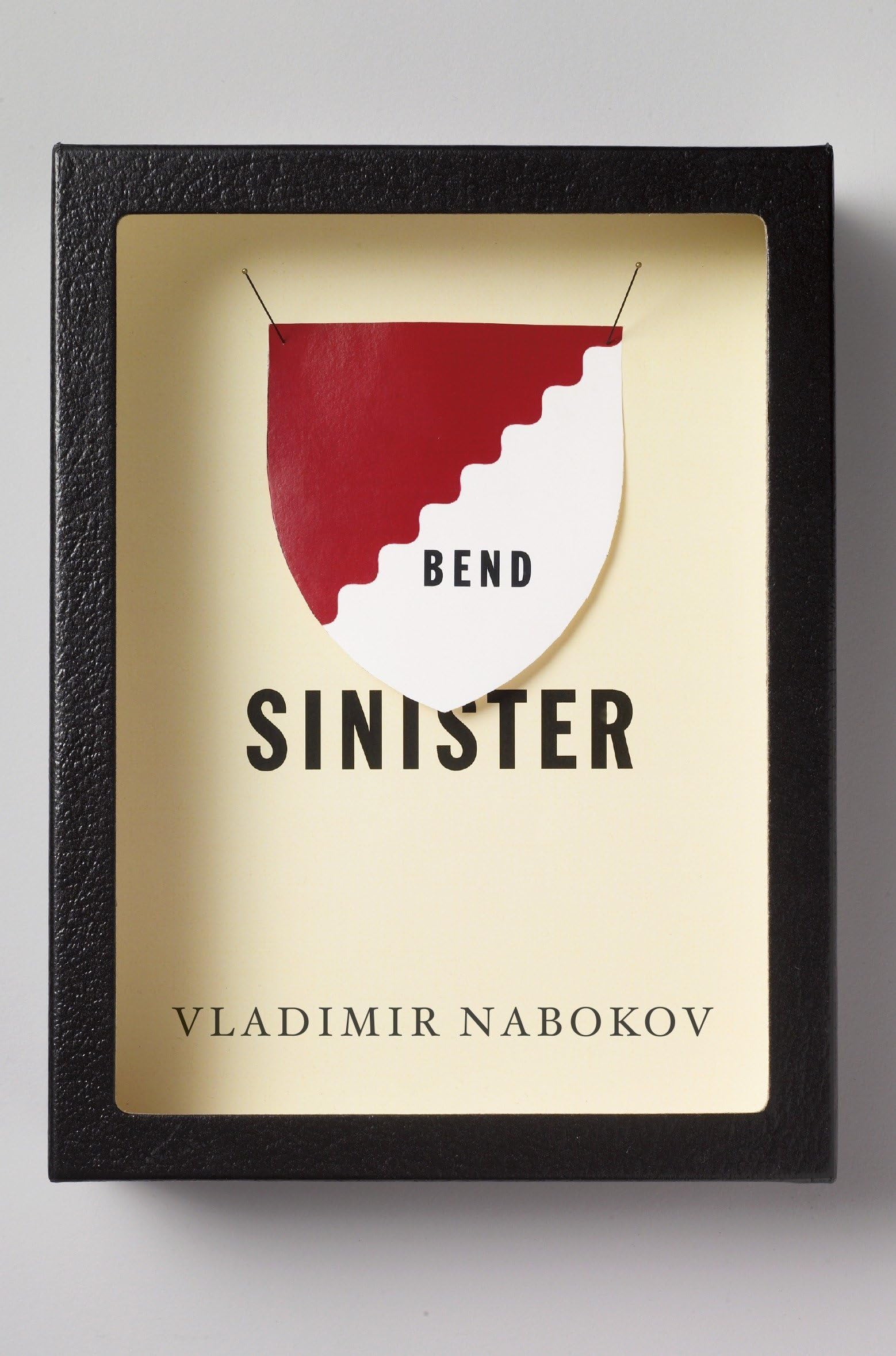
Bend Sinister [Nabokov, Vladimir] on desertcart.com. *FREE* shipping on qualifying offers. Bend Sinister Review: Curlicue Oblique - A more masterfully oblique narrative structure than what Nabokov accomplishes in Bend Sinister would be hard to imagine, short of James Joyce. Don't let that comparison scare you off, however! For all its complexity, Bend Sinister is thrillingly immediate and engrossing, a "page turner" rather than a foot-note finder. Embedded in the wild allusions and tipsy imagery of Nabokov's hyper-English, there's a heart-stopping narrative, the story of Adam Krug, an intellectual grizzly of a man, whose wife has just died and who struggles to rescue himself from mental and his son from actual catastrophe. That personal drama unfolds within the larger struggle of Krug, the man of genius, to maintain his detachment from the tyranny of "mass man" established in his fictional country by his abominable former schoolmate, Paduk the Toad. Paduk's overweening urge is to suborn Krug to his will, and for a creature of the lowest cunning, Paduk has resources of nearly comic-book unreality. Krug's resistance, morally superior at every point, curlicues ever deeper into nightmarish negation. It's inexplicable to me what a leap of levels of magnitude Nabokov's sheer stylistic mastery took, from his very fine novels in Russian to his incomparable novels in English. Bend Sinister was his first novel published in America after six years of residence. Shall we just proclaim that the wealth of literary resources of the English language offered Nabokov a richer medium? That sounds like chauvinism, but how else can such a transformation be explained? The narration of Bend Sinister occurs in a "no one else's land" tilting between stream-of-consciousness and the Omniscient Narrator, with the changes of voice craftily muted until the very final chapter, when the 'author' reveals his omnipotence. Krug's streaming consciousness shifts without warning from wakeful planning to fateful dreaming, and within the surreality of Paduk's tyranny it's nearly impossible to delimit real horrors amid unimaginable villainies. Odd intrusions of Slavic and Germanic languages (in parentheses) intensify this obliquity of narrative, as if the "author" feels compelled to translate Krug's imagery back into his proper linguistic cognition. As the action-drama of Krug's struggle to save his son slithers into hideous sadism, the competing languages lose their boundaries in a parenthetical chaos. And then our "author" mercifully intervenes... from the sensory devastation of Krug's mind we slip into the polished poetry of the author's, at his writing table, playing with a moth. Bend Sinister has been taken to be Nabokov's "most overtly political" novel, his expression of protest against the Soviet Communist ruination of the Russia from which he fled. And perhaps that is what Nabokov had in mind. The portrayal of the Toad's inept yet overwhelming misrule, however, isn't nearly as specific to Stalinist Russia as the details of the imaginary setting suggest. The actual conduct of the Toad's toadies reminds me more of Nero, Idi Amin, or Pinochet. or any mad demagogue that has the whole life of his people in his fists for whatever reason. There's an unsatisfactory tinge of superman-worship in Nabokov's political philosophy, reminiscent of Nietzsche, Ibsen, Ouspensky, GB Shaw, Ayn Rand - that is, the fear of the exceptional man being crushed by the mass man. Paduk's organ is his Party of the Average man, and Krug refuses to be average. Communist Russia's catastrophe, I submit, was not the crushing of the exceptional man by the average, but just the opposite, the crushing and cruel exploitation of the ordinary people by an elite of extraordinary b_st_rds, proclaiming hypocritical ideals. The 'Vanguard of the Proletariat" is surely the most elitist notion ever propounded. Here's an interesting passage from Krug's self-imaginings: "The trouble with Krug, thought Krug, was tha for long summer years and with enormous success he had delicately taken apart the systems of others and had acquired thereby a reputation for an impish sense of humour and delightful common sense whereas in fact he was a big sad hog of a man and the 'common sense' affair had turned out to be the gradual digging of a pit to accomodate pure smiling madness.... so that he finally began regarding himself (robust rude Krug) as an illusion or rather as a shareholder in an illusion which was highly appreciated by a great number of cultured people..." Self and the illusion of self, the doubling of consciousness, the watcher watching himself being watched -- such recurrent themes in Nabokov's books. With the boundaries between Krug and his Imaginer so deftly smudged, shouldn't we be tempted to take this passage as a confession? It's the language, the symphonic glory of imagery and allusion, that in the end makes everything Nabokov wrote so absorbing, despite any bizarre characterization and/or appalling subject matter. I've often puzzled over Nabokov's notorious inability to appreciate music, to hear music as anything more than annoying noise. I think it was because he was unable to stop the flow of words in his mind, to hear without thinking and feeling in words. Perhaps that was what made him the writer he was, that every perceptual cranny of his mind was stuffed with words. And perhaps the ability to hear without words or see without words makes some people musicians or painters. Bend Sinister is a very great novel, not just because it opens the gate to Nabokov's literary estate, but in its own right. It's easier to love than Lolita, and easier to grasp than Pale Fire. If you haven't yet become an admirer, this might be the best possible book to read first. If you love later Nabokov, you'll be astonished at how fully developed his art was already in his first American novel. Review: Worth the read - Worth the read - but not his best work

| Best Sellers Rank | #953,076 in Books ( See Top 100 in Books ) #5,665 in Fiction Satire #8,310 in Contemporary Literature & Fiction #19,703 in Literary Fiction (Books) |
| Book 21 of 37 | Harry Palmer |
| Customer Reviews | 4.2 4.2 out of 5 stars (175) |
| Dimensions | 5.12 x 0.56 x 7.98 inches |
| Edition | Reissue |
| ISBN-10 | 0679727272 |
| ISBN-13 | 978-0679727279 |
| Item Weight | 8 ounces |
| Language | English |
| Print length | 272 pages |
| Publication date | April 14, 1990 |
| Publisher | Vintage |
G**O
Curlicue Oblique
A more masterfully oblique narrative structure than what Nabokov accomplishes in Bend Sinister would be hard to imagine, short of James Joyce. Don't let that comparison scare you off, however! For all its complexity, Bend Sinister is thrillingly immediate and engrossing, a "page turner" rather than a foot-note finder. Embedded in the wild allusions and tipsy imagery of Nabokov's hyper-English, there's a heart-stopping narrative, the story of Adam Krug, an intellectual grizzly of a man, whose wife has just died and who struggles to rescue himself from mental and his son from actual catastrophe. That personal drama unfolds within the larger struggle of Krug, the man of genius, to maintain his detachment from the tyranny of "mass man" established in his fictional country by his abominable former schoolmate, Paduk the Toad. Paduk's overweening urge is to suborn Krug to his will, and for a creature of the lowest cunning, Paduk has resources of nearly comic-book unreality. Krug's resistance, morally superior at every point, curlicues ever deeper into nightmarish negation. It's inexplicable to me what a leap of levels of magnitude Nabokov's sheer stylistic mastery took, from his very fine novels in Russian to his incomparable novels in English. Bend Sinister was his first novel published in America after six years of residence. Shall we just proclaim that the wealth of literary resources of the English language offered Nabokov a richer medium? That sounds like chauvinism, but how else can such a transformation be explained? The narration of Bend Sinister occurs in a "no one else's land" tilting between stream-of-consciousness and the Omniscient Narrator, with the changes of voice craftily muted until the very final chapter, when the 'author' reveals his omnipotence. Krug's streaming consciousness shifts without warning from wakeful planning to fateful dreaming, and within the surreality of Paduk's tyranny it's nearly impossible to delimit real horrors amid unimaginable villainies. Odd intrusions of Slavic and Germanic languages (in parentheses) intensify this obliquity of narrative, as if the "author" feels compelled to translate Krug's imagery back into his proper linguistic cognition. As the action-drama of Krug's struggle to save his son slithers into hideous sadism, the competing languages lose their boundaries in a parenthetical chaos. And then our "author" mercifully intervenes... from the sensory devastation of Krug's mind we slip into the polished poetry of the author's, at his writing table, playing with a moth. Bend Sinister has been taken to be Nabokov's "most overtly political" novel, his expression of protest against the Soviet Communist ruination of the Russia from which he fled. And perhaps that is what Nabokov had in mind. The portrayal of the Toad's inept yet overwhelming misrule, however, isn't nearly as specific to Stalinist Russia as the details of the imaginary setting suggest. The actual conduct of the Toad's toadies reminds me more of Nero, Idi Amin, or Pinochet. or any mad demagogue that has the whole life of his people in his fists for whatever reason. There's an unsatisfactory tinge of superman-worship in Nabokov's political philosophy, reminiscent of Nietzsche, Ibsen, Ouspensky, GB Shaw, Ayn Rand - that is, the fear of the exceptional man being crushed by the mass man. Paduk's organ is his Party of the Average man, and Krug refuses to be average. Communist Russia's catastrophe, I submit, was not the crushing of the exceptional man by the average, but just the opposite, the crushing and cruel exploitation of the ordinary people by an elite of extraordinary b_st_rds, proclaiming hypocritical ideals. The 'Vanguard of the Proletariat" is surely the most elitist notion ever propounded. Here's an interesting passage from Krug's self-imaginings: "The trouble with Krug, thought Krug, was tha for long summer years and with enormous success he had delicately taken apart the systems of others and had acquired thereby a reputation for an impish sense of humour and delightful common sense whereas in fact he was a big sad hog of a man and the 'common sense' affair had turned out to be the gradual digging of a pit to accomodate pure smiling madness.... so that he finally began regarding himself (robust rude Krug) as an illusion or rather as a shareholder in an illusion which was highly appreciated by a great number of cultured people..." Self and the illusion of self, the doubling of consciousness, the watcher watching himself being watched -- such recurrent themes in Nabokov's books. With the boundaries between Krug and his Imaginer so deftly smudged, shouldn't we be tempted to take this passage as a confession? It's the language, the symphonic glory of imagery and allusion, that in the end makes everything Nabokov wrote so absorbing, despite any bizarre characterization and/or appalling subject matter. I've often puzzled over Nabokov's notorious inability to appreciate music, to hear music as anything more than annoying noise. I think it was because he was unable to stop the flow of words in his mind, to hear without thinking and feeling in words. Perhaps that was what made him the writer he was, that every perceptual cranny of his mind was stuffed with words. And perhaps the ability to hear without words or see without words makes some people musicians or painters. Bend Sinister is a very great novel, not just because it opens the gate to Nabokov's literary estate, but in its own right. It's easier to love than Lolita, and easier to grasp than Pale Fire. If you haven't yet become an admirer, this might be the best possible book to read first. If you love later Nabokov, you'll be astonished at how fully developed his art was already in his first American novel.
A**R
Worth the read
Worth the read - but not his best work
R**R
Classic This book is just as important now as it was when it was written
This is a heavy blend of dark comedy and drama as one can come to expect from Nabokov as they read his works. This is mainly about a very serious topic which i felt was about losing identity within the confines of federal or state rules as well as the residual effect to loved ones. Nabokov gets a bad rep for being cruel and perverted which he is a master of in relation to his characters but he really cares about people. I see similarities in the bittersweet relationship i have with life in the way Nabokov seems to understand. Underneath the foundation to all of his books i have read so far (this is the 8th) i see a man concerned with the rapid movement of the world in a socioeconomic/technological way. I think he felt the human race is moving too fast and away from the mind. His concern in Bend Sinister is with the changes in each persons lives in relation to state of federal control. This is basically a knock down argument against free will . This is an advanced philosophy class type of experiment that would be good in a discussion style class. He asks many questions here but an important one involves his son. This is in a dystopian type of setting where a national socialist type of regime is taking over and rapid changes are taking place. To not give away too much there are gestapo type of groups everywhere policing people who do not completely conform in every way. The main character does not comply in relation to something (again im being very vague on purpose) therefore his son is taken away. The argument here is that no matter how neat a nest egg you set up for your family and even if you are financially secure and successful you have limited to no free will in relation to outside factors. I am a firm believer in no free will. It was hard for me at first to extend the definition of free will to outside factors. I though the argument was if i open a door and walk through i have not the will to control that? Even though i now view myself as a collection of electro/chemical reactions, i still never at first realized that free will can be manipulated at any time. Nabokov asks are you ever safe from social/political changes? In a time where social networking is causing too much false or pointless info ending in drastic results this book is more important than ever. I always read in public and am getting more and more strange looks like i am someone from the past. A book! woaaa! I think one of the main fears of Nabokov here is the moving away from academia and time leading to a period of anti intellectual movements.
A**R
Not new, as advertised
This is not a new book. The cover corners are all bent. The book was definitely used
L**A
Effective satire from the master wordsmith
No doubt what many reviewers have noted -- this is a complex book, working on different levels, from different perspectives (I think the 1st person pronoun starts showing up toward the end!). Short of serious scrutiny and multiple readings, I have not captured much of what is going on in this book. Nevertheless, this was my first Nabokov and it's like discovering Rushdie: such an incredibly distinctive, engaging voice and, in this case, a genius with language. And despite the complexity, there is a simple story here, and it made me laugh out-loud several times, it conjured up many powerful images, the character of Adam Krug is unforgettable, and it is indeed powerful satire. My one criticism is that for all of his linguistic might, Nabokov may not know the human heart. The story has much to do with Adam and his son. Yet for the most of the book, this relationship is touched upon only superficially. Even a few revealing episodes between father and son could have made this book more powerful. Likewise his deceased wife. He loved her -- but the basis for his love is not clear. A basis for fondness and admiration, yes, but not love.
E**C
Like something broken
Disturbing. Like something broken. A kind of horror novel. A nightmare. May no one ever have to endure such a nightmare... and in a way... with the state of current events in the US... perhaps, we kind of actually are enduring a kind of horrific nightmare. Hopefully, we will be able to wake up from it soon, and look back upon the era receding into the dark mists of the river of time. Naturally, Bend Sinister, is perfectly written by Nobokov the Master Wordsmith of many languages.
L**G
It’s a fantastic story full of humour and horror. It really is a look into how small parties can have a big impact on the country they are a part of.
B**A
My feeling for this Nabokov novel will remain undiminished even in the face of all the other and equally excellent titles that I had recently read(the highlights being The Luzhin Defense, Glory). The underlying feeling after reading previously four of his Russian novels would be to have a sense of deja vu on reading this work- the second of his novels written in English. But indeed it was not. For despite all the metaphors and similes that populate his work, and despite all the trickiness and poetry of his descriptive prose and his signature attention to detail, the main highlight here was to differ in the setting and topicality of the novel- that being of a nation taken over by a sinister and totalitarian regime and of a middle aged academician trying to escape it with his son but in vain. The ending is equally chilling and sinister and holds out with some of the best prose that this Russian master had to offer esp in works like Laughter in the Dark and Invitation to a Beheading. There was something in the prose that reminded me a lot about Glory- which IMO is the greatest of all his Russian novels, and there was something in the topicality of it that reminded me at times about Kafka's The Trial. But at the same time, although the urgent attention to detail was evident, there was something unusual about the workings of Bend Sinister. Probably the utter disparity in the workings of the plot when compared to his previous works may have led to a below par execution going by Nabokov's standards. The unusual theme and the intricacies of the prose took a toll of me at one point so that the consistent maneuvering of the despotic state of the irreverent rubble of mankind went by me as if in a blur. I was too overwhelmed probably. But overall this is an excellent Nabokov novel.
D**S
You know when you're in the presence of genius, and Nabokov never disappoints. It's hard to say much about this without giving the game away, but let me see... The story concerns Adam Krug, whose wife dies just as a totalitarian party is taking charge of the state. Krug was at school with the new dictator, and they have a complex bully/victim relationship - at least, complex from the dictator's point of view. Distracted by grief, Krug sees the new regime as clearly absurd, and the black comedic tone may blind him and us to - But there, you see I can't reveal more. This is a journey you have to take yourself. It's a perfect portrait of the banality of evil, it's beautifully written, the characters really matter (oh my, do they matter!) and Nabokov even manages to pull off a few metafictional passages that, in any other hands, would crack the whole edifice, but here they come across as essential rather than mere trickery. Read it to see what literature can be.
B**E
Nabokov’s nuanced dystopian novel follows eminent philosopher Krug. A classmate from his school days has risen to political power with the ‘Party of the Average Man’. Krug wants nothing to do with this totalitarian/utopian regime, yet he is pursued by its leader. Basically it’s ‘side with us or else’. Henchmen of the Party do something drastic which leads to a truly terrible outcome. The Party of The Average Man is run by average men, average sinister men, and their ineptitude results in further appalling errors. By the end, so overwhelmed with compassion for Krug and disdain for The Party, Nabokov almost flames the whole text. A few times I nearly dropped out, but the darkly surreal overtones kept me in there.
V**L
A philosopher's obduracy to not bow down to a revered dictator takes away, one by one, all the loved ones from his life. A tortuous tale of an insouciant savant with no match, brought to a quivering life and then to adulthood by Nabokov's lapidary work.
Trustpilot
1 week ago
2 weeks ago