Buy anything from 5,000+ international stores. One checkout price. No surprise fees. Join 2M+ shoppers on Desertcart.
Desertcart purchases this item on your behalf and handles shipping, customs, and support to UAE.
🎶 Unlock pro-level beats anywhere, anytime — your studio just got portable!
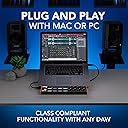
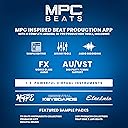
The Akai Professional LPD8 MK2 is a compact USB MIDI controller featuring 8 velocity-sensitive RGB-backlit MPC drum pads and 8 assignable Q-Link knobs, designed for seamless hands-on control of music production software on Mac and PC. With 4 programmable preset slots, plug-and-play USB connectivity, and a rugged yet portable design, it empowers musicians, producers, and DJs to create, mix, and perform with professional precision wherever inspiration strikes.


| ASIN | B0BF9MN8R2 |
| Best Sellers Rank | 2,440 in Musical Instruments & DJ ( See Top 100 in Musical Instruments & DJ ) 17 in MIDI Controller |
| Brand | Akai Professional |
| Brand Name | Akai Professional |
| Colour | Black |
| Compatible Devices | Laptop, PC |
| Connectivity Technology | USB |
| Connectivity technology | USB |
| Connector Type | USB |
| Control Method | Touch |
| Control Type | Percussion Controller |
| Country of Origin | China |
| Customer Reviews | 4.4 out of 5 stars 6,337 Reviews |
| Global Trade Identification Number | 00694318025567 |
| Hardware Interface | USB |
| Hardware Platform | Intel x86-64 or Apple M1 |
| Human Interface Input | Buttons, Dial |
| Included Components | LPD8 MK2, Quickstart Guide, USB Cable, Security and Warranty Manual, Software Download Card |
| Instrument | Drum |
| Instrument Key | Any |
| Item Dimensions D x W x H | 30.8D x 7.9W x 3.2H centimetres |
| Item Type Name | AKAI Professional LPD8 - USB MIDI Controller with 8 Responsive MPC Drum Pads for Mac and PC, 8 Assignable Knobs and Music Production Software |
| Item Weight | 0.4 Kilograms |
| Keyboard Description | Pad and Knob Controller with 8 velocity-sensitive RGB-backlit MPC pads and 8 rotary controls |
| Manufacturer | inMusic Europe Limited |
| Manufacturer Part Number | LPD8MK2 |
| Material Type | Plastic |
| Model Name | LPD8 MK2 |
| Model Number | LPD8 MK2 |
| Model Year | 2022 |
| Model name | LPD8 MK2 |
| Noise Control | None |
| Number of Keys | 8 |
| Number of keys | 8 |
| Platform | Mac, Windows |
| Product Style | Pad Controller Only |
| Product Warranty | 12 months manufacturer. |
| Product dimensions | 30.8D x 7.9W x 3.2H centimetres |
| Size | LPD8 |
| Special Features | MPC drum pads, Portable, USB powered, assignable knobs, production software included |
| Special feature | MPC drum pads, Portable, USB powered, assignable knobs, production software included |
| Supported Software | GarageBand |
| UPC | 694318025567 |
| Unit Count | 1.0 count |
G**T
Getting sound from the Akai LPK25 mini keyboard
This is not so much a review as help for anyone who buys this mini keyboard and expects to play music with it 'out of the box' - even to test that it's working. It won't do anything without other software, but there's plenty around that is free. As far as the LPK25 product is concerned, it's great and does everything it's supposed to. Apart from Amazon, there are plenty of positive reviews and video demos to support this. However, the LPK25 is not really intended for someone who just wants to start playing a music keyboard through a computer by paying as little as possible. In spite of the attractive price for a touch sensitive keyboard, this is actually more a digital music creator's tool. It's not a 'standalone' playable keyboard. The LPK25 is simply a MIDI controller, and there is a big difference. Nevertheless, using a suitable program (many are free), anyone can learn to arrange and play music with the LPK25. A buyer could be forgiven for thinking the unit is faulty out of the box, as although it should be recognised when plugged into a USB port, apart from a light or two working, it will be otherwise unresponsive and no sound will come out of the computer speakers or other sound output when keys are played. What to do now? Before assuming it might be DOA (as have others) I spent countless hours on research in forums, reading reviews, watching YouTube demos, learning about all the different programs you can use for various effects, musical composition etc - downloading, installing and trying them, and I still failed to get a single peep out of the b....y thing! Eventually the 'Aha moment' arrived, sound emanated and things became clearer. On the positive side, I have learned a lot! So here's how to quickly check your LPK25 out and start making music (sound at least!) with it using a suitable music program to control it. Note that the supplied Akai LPK25 Editor isn't for producing sound. It is only for controlling the 4 program presets and built-in Arpeggiator (notes play automatically in sequence). It's not even necessary to install it at this stage. Any computer audio interface/card should work well enough for MIDI output using e.g. Windows MS GS Wavetable SW Synth; however, CoolSoft VirtualMidiSynth (free) gives better instrument sounds. Later you may move on to sound fonts and live instrument patches, but don't worry about that now. The LPK25 needs only one program to play and/or record keyboard input to be sent to your computer speakers. Any MIDI sequencer, composer, mixer, DAW (digital audio workstation) will do. There are hundreds out there, a lot of them completely free or with usable demo versions. Any program that has a MIDI input port controller should work. The problem is that many of them have so many features, it's difficult to find out how to start playing a few notes without going through a whole tutorial - to then decide that you don't really like that program! I tried many, but I found Sequetron LE (free) was very easy to install and use immediately to play notes. The first short YouTube video (search Sequetron 8.06) will be enough to get you going and also provides the publisher website from where you can download the program. 1. Plug the LPK25 into a USB port. The operating system should recognise it as 'LPK25' or simply 'USB Audio Device' and it will use a Windows or other system driver. Nothing else is needed other than speakers turned on! 2. Once Sequetron (or other program) is installed, run it and in Config, Ports, set the MIDI Input to USB Audio Device (LPK25). Close the dialog box, then click the Run (Stop) button (metronome moves in Run mode). Press keys on the 'virtual keyboard' with your mouse and play some notes on the LPK25. From either, you should hear piano sounds from your speakers. If you turn on the LPK25 Arpeggiator button/light, notes you hold should repeat in sequence. It's working! If you press Stop, sound output stops too. Press Run to hear sound. You can change from piano to any MIDI instrument and do all sorts of wonderful things once you learn how by reading and watching tutorials and using your undiscovered musical talents with your eventual software choice!
D**P
Fantastic!
This really is a great piece of kit and dead easy to set-up. So here are some facts about this keyboard. 1. It does not produce any sound on its own. It's designed to work with Virtual Studio Tech (VST) and Digital Audio workstations (DAW) or midi software (Anvil Studio for example). There are plenty FREE to download on the internet. 2. It's plug and play, works a like a dream with Windows 10. I use it with the SuperSonico 5 stand-alone VST synth and it's just brilliant. 3. It comes with set-up program on CD if you want to program the Arppeggiator, sustain and octave buttons to behave in a certain way. The user guide is also included. 4. If you buy it and register it with Akai then you can get some free keyboard tutorial software. Ideal for beginners. 5. It fits into the front pocket on my laptop case so is really easy to carry around. I read some of the reviews before I purchased this product and I can't understand why anyone would give it less that 4 stars at least. I believe there is a wireless version of this keyboard but that's not what I bought. For the price I paid I am more than pleased.
L**A
Simple and cheap.. works great with various devices
I use this quite a lot.. I got into making music on my PC again (FL studio mostly) and wanted something to simply play keys with instead of the actual keyboard.. after using it FL for a while I bought an apple adapter for my phone so I could connect and power a keyboard.. it worked perfectly. I can now control apps on my phone like synth one with the keyboard and use the aux on my pedal to send the sound to. So basically using this keyboard with practically infinite synth sounds. I use the boss RC30 and connect this, a guitar and a bass and can get all sorts of music made without much thought at all.. need a beat open a app to make a beat, loop it.. get some synth and bass going and loop that.. really fun. The only downside is that is is pretty cheaply made and after not long one key started sticking a little. It's still like it and I don't notice it that badly, but it was an issue after not long from having it. That said it does work just fine but kinda feels funny on that key sometimes.. works a treat with most midi things though, really compact and ideal for just finding what you're looking for keys wise on a lot of programs. Bigger with more functions would be better, but this is ideal to start with.
G**Y
Great keyboard, shame about the useless software
Fantastic piece of kit for this novice. But make no mistake, this is not a toy, nor does it feel like one. I bought mine to help get to grips with music theory. First the bad news: AKAI customer support is abysmal, as are the supplied software opportunities, music lessons behind a paywall, but it's the software that makes the difference with the Pro LPK25. If you are on Apple or Android lucky you, there's loads of great free midi controller VST & DAWs apps in the app stores. If like me your Galaxy S9 doesn't have a USB socket to plug into, then you'll need Windows compatible software for pc & laptop. I only mention it because I was going loopy(no pun) trying to find anything I could actually use. The good news: My salvation came in the shape of 'IGNITE' by Air Music Technology. Free download to AKAI customers, courtesy of the serial number on the back of the instrument, that doubles as your activation key. Being Windows 7&8 compatible it is probably quite old but the 1.3.0 version runs beautifully on Windows10 pc & laptop. Current version is 1.4.0 but costs about £50. There must be hundreds(1000s? a lot) of voices for every instrument folk using this are likely to need, plus live input from mike or instruments. Look for excellent Ignite Air 'how to' tutorials on You Tube, they actually use AKAI midi controllers. The bundled Ignite Air tutorial videos downloaded on your pc need Adobe Flash Player, that no longer functions. The printed version is available as a downloadable file, but at over 100pages, using your printer for hard copy might be problematic. I confess, as a guitarist with no ambition towards keyboard, once I got the wee keyboard and the Ignite talking to each other, plug n play, I discovered hours later I could not put it down. The motion sensitive keys work really well with the software, mimicking the sensitivity of piano keys. I can just manage a full 7th chord spread with my fingers. So quite a usable mansize.
I**N
Akai LPK25 Keyboard.... let the symphony begin!
I thought I would look at other reviews of this piece of equipment before purchasing, it didn't take me long to make my mind up. There are four similar keyboards presently available and the Akai wins hands down! There is nothing better than getting the feeling that you know what sound you want and being able to take your laptop and this keyboard out and whether you use Fruity loops or Sibelius, you can get it from your head to the computer anywhere and that IS cool!. Of robust design and the velocity sensitivity is very accurate. Initially picking it up through DMS can be tricky but it carries its own usb and midi port information that its easy to find. For me its made making music so much fun, and as I live in a flat its not so easy to leave a large midi keyboard out for space reasons so this is perfect, its small and fits on the qwerty keyboard shelf on my computer desk so all I have to do is plug it in, and see if its connected by turning on the arpeggio button, oh yeah its got programmable arpeggio settings... fun in a small packet. Whether your into Chopin or like me Chicane, this is a great piece of kit. I can horoughly recommend buying it... If you doubt me, check it out on You Tube....
Z**D
An excellent addition for any MIDI compatible music production software
I bought this to use with Magix’s Music Maker 2021 premium edition and Acid Music Studio 11 to be able to better utilise the virtual (VST) instrument capabilities of both. Being a relative newcomer to music production I needed something easy to install and set-up, and this keyboard is ideal as it’s plug and play in Windows 10 (i.e. there’s no external drivers to install). Once connected via the USB cable it was just a case of going into Music Maker’s audio/MIDI settings and choosing Magix’s low latency 2016 driver for the audio playback device and LPK25 for the input device. And that was it; the keyboard was ready to use. As for Acid Studio, there was nothing I needed to do in the settings as the keyboard worked straight away. The included CD contains editor software and a quick-start user guide for both it and the keyboard. The keyboard can be used without installing the editor as many of the functions are directly accessible from the keyboard itself, but by installing it, up to four presets can be created, edited, stored and uploaded to the keyboard, and it adds a number of otherwise unavailable but useful functions, such as transpose and an arp (arpeggiator) clock to synchronise the arpeggiator to an external BPM timing to keep it in unison with whatever software one happens to be using. If a disk drive isn’t available then the editor software can be downloaded from the Akaipro website. Please note that the CD only contains the editor and quick-start guide, and not the free MPC Beats software, which has to be obtained via the above-mentioned website, whereby an account needs to be created and the keyboard registered to obtain the serial number and download link for it. I haven’t installed MPC Beats, but from reading about it and watching tutorials it seems to be a powerful and capable application with many desirable and advanced features. The box the keyboard comes in mentions an offer for a discount for Ableton Suite or Ableton Live but I haven’t bothered with that either. The keyboard is small enough to be portable but still large enough to be able to comfortably play. Although there’s only twenty-five keys (slightly over two octaves) there’s buttons on the left that shift them up or down so that an entire nine-octave range can be covered. The middle octaves are easily identified as the buttons aren’t lit, but as soon as the octaves are shifted then the appropriate button lights. All well and good, but it would be handy to have an indication showing exactly what octaves are selected. However, it’s likely assumed that hearing alone is sufficient for identifying which range is selected, with the middle not being illuminated probably as a quick reference guide. The keys are velocity-sensitive and work well enough, but I found them slightly stiff compared to other keyboards I’ve used. As well as the octave buttons, there’s four additional buttons: a sustain button which when pressed and held either sustains notes or latches the arpeggiator to keep it running (also allowing additional notes to be added to the sequence if desired), a program button for accessing stored presets uploaded from the editor, and two arpeggiator buttons — one to activate it and the other a ‘tap’ button for manually tapping its speed when not synchronised with external timings. By pressing and holding the arpeggiator button, followed by one of the keys with a red option above it, a fairly wide range of arpeggiator effects can be initiated, such as time division, mode and octave (including the ability to sweep through octaves) for exciting and varied sweeps. If the editor is used then presets can be created with the following parameters: transposition (+/-12), octave (+/-4), arp octave (0–3), arp enable, arp mode (up, down, inclusive, exclusive, order and random), arp time division (1/4 to 1/32 and triplets), arp clock (internal or external), arp latch (sustain), tap tempo taps (2–4) [for selecting the minimum number of taps of the tap button before a new speed can be set], and tempo BPM (30–240). The keyboard doesn’t produce sound on its own as it’s only a controller. It is though universally compatible so should work with most applications. There are no other input or output connections on it apart from the supplied one-and-a-half metre USB cable (which also powers it). The keyboard is polyphonic so can be used for playing chords. It doesn’t have pitch and modulation wheels, and neither does it have pads for creating beats, but the keys themselves can be used for the beats or drum parts. Overall build quality seems to be reasonable, although the function buttons seem a little flimsy. For the price of it, and the extra capabilities and ease it brings, the keyboard is an excellent buy.
M**H
nice and small, but poor, painful action
The keyboard is nice and small and portable, but the action is overly stiff and springy, and even taking into account the compromises necessary for the size, is too difficult to play. I have played other keyboards of this size with much more playable action. It's difficult to get decent velocity control with the stiffness of the keys. Would recommend spending a bit more and getting something better.
A**R
Pointless
I bought the 'AKAI Professional LPD8 MK2' (professional??) as I wanted to make it easier to create drums in Garageband and EZDrummer. I have an AKAI midi keyboard, but I don't have a lot of desk space and I thought this pad controller would be handy and space-saving. Sadly though it's let down by several issues: Sensitivity, or the lack of. You have to hit the pads so hard, your fingers would eventually hurt. Because of this you have no control how hard you hit the drums. You simply can't create any subtlety, it's pretty much all, or nothing with a very small margin that you can't seem to control. Adding to this, there is no option to adjust the sensitivity. I even read online that some users were having to go inside and sticking tape to the sensors to help. The next thing is the lack of a detailed manual. The ones bundled don't mention the Editor (MK2 Editor), which you need to use in order to asign which pad does which drum/cymbal etc. I did find the software on the AKAI website and downloaded. The PDF instruction that are available for the editor were very vague, so I had to look for tutorials online. All the online tutorials for the editor were for the old version (MK1) going back 13 years on some. The new MK2 version has a slightly harder to use interface. You can't just type in the notes, i.e. C1, D# etc, you have to enter the number that corresponds with the note. The older version was easier by the looks of it. Sending the changes to the device was also a problem, I put it C1 for bass drum, but in Garageband and my midi lookup app it was showing C0. This was the same for all of the enteries, they were all an octave out! So pretty dissapointed. I guess I'll have to just use my midi keyboard controller instead as this thing is total junk.
A**R
Adelante con la compra
Increíble, los materiales son de buena calidad, muy portátil y plug & play
J**.
Strong
Very cool and sterdy I love it
M**A
Works fine.
Compact and very handy, really value for money. Take note of the dimensions though, it's very small.
J**E
Great Akai product
It’s a typical Akai product. Durable, responsive, compatible, and comes with loads of bonus software. The pads are a little stiff. I gotta smack em purdy hard but they just need to be broken in. It’s compact and looks dope. Doesn’t feel too light and cheap or too heavy and out dated. Very durable. Connects via usb. Plug and play all day. If you travel bring it with you on the plane and plug it up to your laptop and you’re back at it. If you’re looking to run it as your main drum pad tho in a home studio setup drop the additional $100 and buy the studio MPD. This is definitely for travel purposes
M**Y
Not good as a drum pad
The pads would not fire unless pressed hard, repeat notes were difficult. The velocity curve was fixed so either have to use full velocity and manually tweak or unreliable button presses. Might be ok for launching clips but not as a drum pad. Returned it.
Trustpilot
2 weeks ago
2 weeks ago