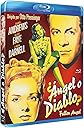
Fallen Angel [ Blu-Ray, Reg.A/B/C Import - Spain ]
Product ID: 47823318
Details
- GenreDrama
- FormatBlu-ray Import
- ContributorAlice Faye
- LanguageEnglish
- Runtime97 minutes
Desertcart purchases this item on your behalf and handles shipping, customs, and support to UAE.
Spain released, Blu-Ray/Region A/B/C : it WILL NOT play on regular DVD player. You need Blu-Ray DVD player to view this Blu-Ray DVD: LANGUAGES: English ( Dolby Digital 2.0 ), English ( Dolby Linear PCM ), Spanish ( Dolby Digital 2.0 ), Spanish ( Dolby Linear PCM ), English ( Subtitles ), Portuguese ( Subtitles ), Spanish ( Subtitles ), SPECIAL FEATURES: Black & White, Interactive Menu, Scene Access, Trailer(s), SYNOPSIS: Eric Stanton (Dana Andrews), thrown off a bus for not having the fare, begins to frequent a diner called "Pop's Eats", whose main attraction is a beautiful waitress by the name of Stella seems disinterested in Eric, he decides if he had money she would pay attention to his advances. He marries June Mills (Alice Faye) for her money, and stella is mysteriously murdered. Even though June Learns of Eric's dishonest plans, she still loves him. It is with her support that he investigates the killing on his own, eventually discovering the shocking identity of the real killer. ...Fallen Angel Review: MOVIE: 4.6 • VIDEO: 4.5 • AUDIO: 2.5 - FORMAT: DVD UPC: 0-24543-22778-6 RELEASED: 2006-03-07 TITLE: Fallen Angel (1945) • NR • 1:37:11 Alice Faye, Dana Andrews, Linda Darnell, Charles Bickford Otto Preminger (Director) After I finished watching this movie I couldn't tell if Otto Preminger (a director, who was well known for casting an unflattering light on American social conventions [i.e.— Anatomy of a Murder (1959) ] and socially accepted mores [i.e.— The Moon Is Blue (1953) ]) was mocking the "love conquers all" mind-set or celebrating its existence. Such ambiguity in a movie, I'm often told, is the hallmark of a director at the top of his (or her) game — the director provides a seemingly detached "view" into a situation, and let's YOU decide how YOU should feel about it. Yeah, right. In the real world, the only time that someone is ambiguous about a major issue is when they are either mentally deficient, or they are trying to con you — which, admittedly, may be what Preminger is trying to do here (namely: con us into thinking that love REALLY does conquer all). Anyway, don't let all this talk about love (and my cynical statements towards it) distract you from what is, otherwise (or, maybe, because of it), an EXCELLENT example of film noir! All of the best noir elements are here, namely: a seemingly bright guy — who is in WAY over his head; a woman of questionable morals — who gets the aforementioned "bright guy" into trouble; a relentless, sadistic cop — who will stop at nothing to "get" his man (or woman); and, lastly, a good murder mystery to stir the pot. Sit back and enjoy the show — this is a good one, boys and girls! HIGHLY RECOMMENDED. NOTE: This movie is one of the films from Fox Home Video's exemplary "Fox Film Noir" series of DVDs (and, in some cases, blu-rays). Every one of the DVDs from this series that I have purchased (e.g.—this movie, I Wake Up Screaming (1941) , Boomerang! (1947) , Where the Sidewalk Ends (1950) , etc.) has featured a VERY high average bit-rate, along with an EXCELLENT picture (for a DVD) and, at a minimum, good to better-than-good sound. See the other reviews for more detail and/or other opinions regarding the plot of the movie. VIDEO: 1.33:1 • B&W • 480p • MPEG-2 (9.3 Mbps) Within the confines of the DVD format, this film exhibits VERY good, to — on frequent occasions — excellent, picture quality; due, in part, I'm sure, to a MUCH higher than average bit-rate than is normally used for a 4:3 (1.33:1) B&W catalogue title. Also, Fox Home Video doesn't state on the box that this movie has been restored or remastered, but it surely looks like it — because, artifacts such as black specks or white dots are nearly non-existent; and, I saw very few hair-lines, nor do I recall seeing any dropped frames. In addition, sharpness and detail (for a DVD) are usually very good — with the textures and patterns of most hair-styles, clothing and furnishings being easily discernible. Lastly, contrast and gray scale (again, for a DVD) are VERY good overall, and in many scenes, even excellent. This DVD looks so good, in fact, that I am definitely NOT disappointed about NOT having the blu-ray version. AUDIO: Dolby Digital 2.0 (Dual-Mono, 192 Kbps) Fox Home Video has apparently also done some clean-up work on the film's soundtrack, because there are no loud bumps nor objectionably high levels of hiss. Also, dialog is very clear and all voices are easily understood. However, dynamic range is very limited, and there is not much bottom-end nor any top-end to speak of (which makes the musical score and the Foley work all sound a little 'thin', and somewhat less than realistic). Otherwise, considering the age of the source elements and the fact that this is a monophonic, dialog-driven movie from the mid-1940s, its audio presentation has more than acceptable sound quality. EXTRAS: Audio Commentary with Film Noir Historian Eddie Muller and Dana Andrews' daughter Susan Andrews Publicity Gallery Production Stills Gallery Unit Photography Gallery Theatrical Trailer Fox Noir Trailers: The House on Telegraph Hill, No Way Out None of the extras were reviewed. Review: Fox be praised! - One of the great benefits of the "Fox Noir" series, of which this film is a standout, is the remastering/release of the classic 1940's work of the great Otto Preminger. All the four Preminger titles in this series demonstrate what a concise, fluid director he was, easily managing crowd scenes as well as dramatic close-ups with his supple, effortless camera. Also, Preminger had a true talent for zeroing in on an actor, instantly revealing what made them different or unique and allowing them to play up their strengths. Under Preminger's care the star of this film, Dana Andrews, was allowed to fully flower. There was a very moving quality in Andrews, particularly when playing a heel as he does in this one, which always suggested that he had just enough soul and intelligence to dislike himself. This is why he was one of the great noir actors: without a lot of fuss, he could convey a deeply felt need to be a better man than was possible. He was, in short, a very graceful and subtle tough guy. Briefly told, the theme of this film is sexual obsession. Every principal male player in the film desperately wants Stella, a hash-slinger in a local café, played by the all-too-soon gone Linda Darnell. This, of course, leads to men behaving very badly. This clearly was a favorite theme of Preminger's, and he never had a better carnal female than Darnell as an object of desire (actually, the emotion all men in the film feel for Darnell transcends desire into the realm of critical need). Darnell is absolutely great and her appeal has held up very well over the 70 intervening years. The other thing that makes these Fox Noir DVD's so good is the expert commentary that accompanies these discs in the Special Features sections. I know . . .sometimes these commentary tracks can be very hit or miss, but the folks at Fox seemed to take some care in their selection of experts, and I have enjoyed them all. The commentary track for this one is supplied by Noir historian, Eddie Muller, and I found his voiceover very, very good. In fact, things I might say in praise of this film are covered much better by Mr. Muller, so I will let you listen to him for yourself when you buy the DVD. Mr. Muller is a real treasure trove of interesting trivia and worthwhile insights. This disc also has Dana Andrews' daughter, Susan Andrews, giving commentary. I have to admit with other DVD movies, I have been often disappointed by commentary from family members of famous stars. Not here. Susan Andrews comes across with an easy warmth and depth that really fleshed out her father, Dana Andrews, as both an actor and a man. I found myself hanging on the stories she told, remembering her father. Lastly, with regard to the digital remastering, Fox has done it right. These classic Noirs never looked better. Excellent all the way. --Mykal Banta
| Contributor | Alice Faye, Anne Revere, Bruce Cabot, Charles Bickford, Dana Andrews, Fallen Angel, John Carradine, Linda Darnell, Otto Preminger, Percy Kilbride Contributor Alice Faye, Anne Revere, Bruce Cabot, Charles Bickford, Dana Andrews, Fallen Angel, John Carradine, Linda Darnell, Otto Preminger, Percy Kilbride See more |
| Customer Reviews | 4.2 out of 5 stars 165 Reviews |
| Format | Blu-ray, Import |
| Genre | Drama |
| Language | English |
| Runtime | 97 minutes |
C**K
MOVIE: 4.6 • VIDEO: 4.5 • AUDIO: 2.5
FORMAT: DVD UPC: 0-24543-22778-6 RELEASED: 2006-03-07 TITLE: Fallen Angel (1945) • NR • 1:37:11 Alice Faye, Dana Andrews, Linda Darnell, Charles Bickford Otto Preminger (Director) After I finished watching this movie I couldn't tell if Otto Preminger (a director, who was well known for casting an unflattering light on American social conventions [i.e.— Anatomy of a Murder (1959) ] and socially accepted mores [i.e.— The Moon Is Blue (1953) ]) was mocking the "love conquers all" mind-set or celebrating its existence. Such ambiguity in a movie, I'm often told, is the hallmark of a director at the top of his (or her) game — the director provides a seemingly detached "view" into a situation, and let's YOU decide how YOU should feel about it. Yeah, right. In the real world, the only time that someone is ambiguous about a major issue is when they are either mentally deficient, or they are trying to con you — which, admittedly, may be what Preminger is trying to do here (namely: con us into thinking that love REALLY does conquer all). Anyway, don't let all this talk about love (and my cynical statements towards it) distract you from what is, otherwise (or, maybe, because of it), an EXCELLENT example of film noir! All of the best noir elements are here, namely: a seemingly bright guy — who is in WAY over his head; a woman of questionable morals — who gets the aforementioned "bright guy" into trouble; a relentless, sadistic cop — who will stop at nothing to "get" his man (or woman); and, lastly, a good murder mystery to stir the pot. Sit back and enjoy the show — this is a good one, boys and girls! HIGHLY RECOMMENDED. NOTE: This movie is one of the films from Fox Home Video's exemplary "Fox Film Noir" series of DVDs (and, in some cases, blu-rays). Every one of the DVDs from this series that I have purchased (e.g.—this movie, I Wake Up Screaming (1941) , Boomerang! (1947) , Where the Sidewalk Ends (1950) , etc.) has featured a VERY high average bit-rate, along with an EXCELLENT picture (for a DVD) and, at a minimum, good to better-than-good sound. See the other reviews for more detail and/or other opinions regarding the plot of the movie. VIDEO: 1.33:1 • B&W • 480p • MPEG-2 (9.3 Mbps) Within the confines of the DVD format, this film exhibits VERY good, to — on frequent occasions — excellent, picture quality; due, in part, I'm sure, to a MUCH higher than average bit-rate than is normally used for a 4:3 (1.33:1) B&W catalogue title. Also, Fox Home Video doesn't state on the box that this movie has been restored or remastered, but it surely looks like it — because, artifacts such as black specks or white dots are nearly non-existent; and, I saw very few hair-lines, nor do I recall seeing any dropped frames. In addition, sharpness and detail (for a DVD) are usually very good — with the textures and patterns of most hair-styles, clothing and furnishings being easily discernible. Lastly, contrast and gray scale (again, for a DVD) are VERY good overall, and in many scenes, even excellent. This DVD looks so good, in fact, that I am definitely NOT disappointed about NOT having the blu-ray version. AUDIO: Dolby Digital 2.0 (Dual-Mono, 192 Kbps) Fox Home Video has apparently also done some clean-up work on the film's soundtrack, because there are no loud bumps nor objectionably high levels of hiss. Also, dialog is very clear and all voices are easily understood. However, dynamic range is very limited, and there is not much bottom-end nor any top-end to speak of (which makes the musical score and the Foley work all sound a little 'thin', and somewhat less than realistic). Otherwise, considering the age of the source elements and the fact that this is a monophonic, dialog-driven movie from the mid-1940s, its audio presentation has more than acceptable sound quality. EXTRAS: Audio Commentary with Film Noir Historian Eddie Muller and Dana Andrews' daughter Susan Andrews Publicity Gallery Production Stills Gallery Unit Photography Gallery Theatrical Trailer Fox Noir Trailers: The House on Telegraph Hill, No Way Out None of the extras were reviewed.
H**G
Fox be praised!
One of the great benefits of the "Fox Noir" series, of which this film is a standout, is the remastering/release of the classic 1940's work of the great Otto Preminger. All the four Preminger titles in this series demonstrate what a concise, fluid director he was, easily managing crowd scenes as well as dramatic close-ups with his supple, effortless camera. Also, Preminger had a true talent for zeroing in on an actor, instantly revealing what made them different or unique and allowing them to play up their strengths. Under Preminger's care the star of this film, Dana Andrews, was allowed to fully flower. There was a very moving quality in Andrews, particularly when playing a heel as he does in this one, which always suggested that he had just enough soul and intelligence to dislike himself. This is why he was one of the great noir actors: without a lot of fuss, he could convey a deeply felt need to be a better man than was possible. He was, in short, a very graceful and subtle tough guy. Briefly told, the theme of this film is sexual obsession. Every principal male player in the film desperately wants Stella, a hash-slinger in a local café, played by the all-too-soon gone Linda Darnell. This, of course, leads to men behaving very badly. This clearly was a favorite theme of Preminger's, and he never had a better carnal female than Darnell as an object of desire (actually, the emotion all men in the film feel for Darnell transcends desire into the realm of critical need). Darnell is absolutely great and her appeal has held up very well over the 70 intervening years. The other thing that makes these Fox Noir DVD's so good is the expert commentary that accompanies these discs in the Special Features sections. I know . . .sometimes these commentary tracks can be very hit or miss, but the folks at Fox seemed to take some care in their selection of experts, and I have enjoyed them all. The commentary track for this one is supplied by Noir historian, Eddie Muller, and I found his voiceover very, very good. In fact, things I might say in praise of this film are covered much better by Mr. Muller, so I will let you listen to him for yourself when you buy the DVD. Mr. Muller is a real treasure trove of interesting trivia and worthwhile insights. This disc also has Dana Andrews' daughter, Susan Andrews, giving commentary. I have to admit with other DVD movies, I have been often disappointed by commentary from family members of famous stars. Not here. Susan Andrews comes across with an easy warmth and depth that really fleshed out her father, Dana Andrews, as both an actor and a man. I found myself hanging on the stories she told, remembering her father. Lastly, with regard to the digital remastering, Fox has done it right. These classic Noirs never looked better. Excellent all the way. --Mykal Banta
F**0
Interesting film noir that offers good acting and direction
Based on Marty Holland's novel of the same name, Fallen Angel reunites director Otto Preminger with some of his team that made 1944's Laura a success. In a debut script by Harry Kleiner, who would go on to write 1954's Carmen Jones, Fallen Angel focuses on the themes typical found in film noirs. Obsession, mystery, and the classic femme fatale are found in this visually pleasing movie. Eric Stanton is a drifter with a shady past who, low on cash, finds himself stuck in the small town of Walton on his way to San Francisco. While dining at the low-budget "Pop's Eats", Eric encounters the diner's waitress Stella, a cynical and hardboiled woman whose returned to her job after going missing for a few days. He is immediately charmed by Stella but her determination to find a man who will marry her and set up a good financial situation for them leaves Eric out of options. He cons his way to setting up a successful show for Professor Madley, a traveling fortune teller and spiritualist, but obsessed with Stella, decides to turn down a job opportunity with him. Determined to be with Stella, Eric charms and woos June Mills, the wealthy daughter of the town's late mayor. Aware that Eric is a drifter, June still falls in love with him despite his ulterior motives to steal her money in attempt to be with Stella. Meanwhile strange incidents occur in town involving Mark Judd, a former cop, who has his own interest in Stella and when she's found dead, Mark is determined to find her killer by any means especially when Eric becomes the prime suspect. Fresh off his success of Laura, Dana Andrews reteamed with Preminger and does well in his performance as drifter Eric. He has better chemistry with Linda Darnell than Alice Faye, but works well to connect with both actresses. Faye, a popular musical star, enjoyed the script and does well as sweet and kind Jill but fails to shine most likely due to Preminger cutting many of her scenes to prop up Darnell and led to Faye's film departure until 1962's State Fair. Charles Bickford and Linda Darnell are the ones who truly standout. Well known for his versatile supporting roles, Bickford plays the obsessive ex-cop Mark Judd well as he interrogates Eric and others with menace. Darnell, then a rising star, steals her scenes as the cynical and hardboiled femme fatale Stella. Her chemistry with Andrews is good and viewers will feel their two characters are an excellent match despite their shady pasts and behaviors. Both Darnell and Andrews enjoyed her performance with Andrews saying she was the best part of the film. While not the best of works for most of the cast and crew, Fallen Angel is an interesting film noir that offers good acting and direction. The film itself continues the themes of Preminger's previous works on crime, mystery, and obsession as well as presenting a character-driven narrative. Similar to Laura and Preminger's future works, viewers will enjoy the psychological aspects, theme of obsession, and the few twists and turns that come along the way. The structure of the story is lacking, something Andrews felt was not a good fit for him or Alice Faye, but Fallen Angel has some positives including excellent cinematography, good acting and direction, and a decently wrapped up ending. Recommended for devoted film noir fans!
E**L
A MUST FOR ANY FILM NOIR COLLECTION!!!
This excellent film deserves to be considered among anyone's list of the best film noir movies ever made. The script is not standardized, so the unexpected is always occurring. There is always a twist in the plot. You never know what is coming. Otto Preminger's direction is taut, focused and he certainly knew how to get the best performances out of all of his actors. As a follow up to the classic film "Laura," also starring Dana Andrews, he etched his name indelibly on the film noir genre. David Raksin, who wrote the song "Laura" for the movie of the same name, also wrote the theme song for this film. And the actors are wonderful. Dana Andrews gives his usual fine performance, turning from a hardened con man into a person who can love. The character actors also carry the film: all of them are magnificent. Anne Revere, Charles Bickford, Bruce Cabot and even Percy Kilbride give three dimensional performances that are awesome. I mention the two female stars last because the situation was interesting. They are as different as night and day from each other. Linda Darnell, dark, beautiful and smouldering, is cast opposite Alice Fay, fair, serious and loyal. Now Ms. Faye was very angry when she saw the final version of the film, feeling her best moments had been edited out and, although she had no hard feelings for Ms. Darnell, she felt the film focused on Ms. Darnell's performance and kind of left her out, or at least placed her at second string. She did not make another film for 16 years. I believe that, regardless of the cut scenes, Alice Faye made a perfect, not lesser, compliment to Linda Darnell, and each equally gave sterling performances. Neither played second fiddle to each other. Both of their performances were of very high quality and admirable. You can't miss with this one. It's really enjoyable to watch such quality film making.
L**2
Very entertaining film noir
I really enjoyed this movie, not just for the dark film noir so excellently directed by Otto Preminger and the acting skills of Dana Andrews, Charles Bickford, Linda Darnell et all. Those are a given. This film was filled with new things galore, and I love how the DVD features a commentary by Dana Andrews daughter and Eddie Muller explaining all the nuances and little quirks to be found in the movie. This is basically a movie about a con man who falls for a fallen woman (Darnell) and attempts to get this fallen woman by seducing a prim and proper virginal woman (Alice Faye) to get the money for it. Some have ridiculed some of the premise of this movie, but one has to remember this WAS made in 1945!!! This movie also represents another fall, one in real life, of the great Alice Faye. I'm sure the story has become well known of how she quit Twentieth Century Fox over how her scenes were cut. I just found out from the commentary that she had a scene where she sang the theme song! That should have been in the movie and the DVD, sure love to see that. For Alice was first and foremost a vocalist, she could make you feel the words of a song by her emoting and facial expressions along with her lovely lovely contralto. She was a treasure, and it's sad to know this movie, however entertaining, caused her to leave the business for so long. Although it was her first true dramatic role Alice in no way could be said to be a great actress because of this role, but I felt she held her own. Dana Andrews is a master, and as some have said the chemistry between he and Linda Darnell's character is palpable. The feel, the interplay between the characters and the small town feel of the setting gives this movie that dark mysterious attraction of a true noir, and as the plot unfolds and reaches a surprising climax resulting in the "fallen angel" of the title, I don't see how a true film buff could not be entertained!
D**M
Classic noir but pretty heavy going
This is a film which is higly respected in "noir" cinema but like many films of the genre, it is heavy entertainment. Released in 1945 as a follow up to "Laura", it used a number of the same technicians, the director Otto Preminger and the leading man Dana Andrews. Andrews plays a drifter who stops at a small town, falls in lust with a waitress, Linda Darnell, and marries one of the town's respected citizens, Alice Faye, for her money so he can run off with Darnell. Darnell is murdered and the remainder of the film follows the discovery of who did it. The film is claustrophobic reflecting the people and small town in which it is set. The main setpiece is a diner. Darnell, who was never better, is brunette, sexy and laconic, lounging behind the counter like a lazy cat. The superficial quality to her acting sits well on this character. On the other side of the counter, a line up of men gaze upon her lasciviously, watching her every move but hiding their eyes under their hats. You can cut the atmosphere with a knife! The juke box plays the theme song "Slowly" and the music is a toneless tease, just like Linda. Alice Faye, blonde and subdued, is a perfect contrast, a symbol of good but with an undercurrent of frustration which helps explain her attraction to Dana Andrews and why she would marry this stranger. Much of Alice's part was cut by Darryl Zanuck to shift the emphasis to the broody Darnell. Alice was so incensed she walked out of 20th Century Fox for good, never to return. You can detect the holes in her part of the film, particularly in establishing the motivation for her relationship with Andrews, but enough remains so that we get the point. Anne Revere plays Alice's spinster sister and adds a superb vignette of an unfulfilled woman. By the way, Alice is very good too. Probably the most impressive feature of the film is the overwhelming sense of sexual frustration, a remarkable example of how to suggest sexual desire within the confines of the censorship of the forties. Everyone is on heat, even Alice. All the males in the cast are unpleasant and charmless so the film is pretty depressing. It lacks the entertainment value of "The Big Sleep" or "Double Indemnity". The DVD quality is first rate, as expected. The commentary is more like a friendly chat between Film Noir expert Eddie Mueller and Dana Andrew's daughter Susan - pleasant listening but lightweight in content. Mueller is completely over the top about Preminger and Andrews - they weren't THAT good! In particular, they seem to read much more into Dana Andrews who actually seems quite wooden to me. Many of the scenes which were cut can be envisaged by production stills; for example, now I understand why when Andrews meets Faye in the church when she is playing the organ, much of the dialogue is illogical. There is reference to an earlier meeting which clearly was cut from the film, probably a scene outside the church when he was leaving town and clearly visible in the stills. No wonder Alice Faye was upset because what remains in fact does not make sense. There are 2 other scenes between Andrews and Charles Bickford involving physical violence. These two scenes, in particular, might have contributed to a more satisfactory ending. After so much atmospheric character development, the resolution of the murder is somewhat cursory. For me, Otto Preminger was too heavy handed for this film to gain classic status and the editing has left holes in the plot, as Alice Faye said. Andrews is on record as disliking the film, feeling it was in bad taste and I know what he means.
C**S
Wonderful film. Dana Andrews shines.
Dana Andrews is at his best in this tense melodrama/crime film. Alice Fay may seem a bit miscast but Linda Darnell is wonderful.
B**H
ABSOLUTELY DISCUSTING
I WAS CHARGED $34 FOR A fallen Angel DVD that was routed to England, which refuses to provide tracking as the order wasn't valuable enough ... even though I paid a premium for a mediocre product. I am on the verge of cancelling my Prime now and if Amazon ever pulls this on me again I'M GONE.
A**S
Not so far-fetched, perhaps?
R. J. Blower in his review states that "There is a great deal in Fallen Angel that does not stack up". I see his point, but then I could level this criticism at a great number of films. Perhaps one ought to start from the premise that all fiction is allegory? But it is quite clear when a work is aimed at a reflection of real-life events that in fiction stretches a point or two as licence. This is what we have with "Fallen Angel" a piece that, as we have said, displays questionable credibility in places; but it is none the worse for that and again, as R. J. Blower comments at the end of his short review, "once seen, the film is not forgotten". I am inclined to agree, having now watched the film five times in the space of a year or so. What may appear on the face of it a little far-fetched can in fact be found to have its origins in reality (whatever that might be - "Molly Dolly, perfume gone, life was but hallucination?") For example, this western notion that clapping a ring on a finger makes for paradise. Certainly Linda Darnell has the potential to lure any hot-blooded male to his doom, which she nearly succeeds in doing for Dana Andrews and achieves outright for Charles Bickford (the hapless, belligerent Inspector Judd). Again, the trusting and adoring Alice Faye (June Mills) could read as an angel out of her depth, but I have known, personally, many a fine lady who has dedicated her life to a "fallen male" or two. And so, I am going to balk the trend and award this film five stars, one for each viewing! Incidentally, a little time ago I was imprudent enough to give my views on the Alfred Hitchcock production entitled "Vertigo". Following a less than constructive crop of comments I withdrew the review, together with a number of other reviews where comment bordered on abuse. Apply the "stack up" approach to Hitchcock and a great deal of his work would fall foul of this censure.
D**4
Five Stars
Great Dana Andrews movie, i loved it. The other actors were also good. I've seen the film several times!
K**O
Auch die Engel brauchen Liebe
Vor dem Analyseversuch das Technische: Der Film wird im O-Ton mit optionalen englischen Untertiteln präsentiert, die DVD hat sehr gute Bild- und annehmbare Tonqualität, die Extras sind spärlich. Und damit zum Film: Zwar hat 1945 noch keiner gewusst, dass das, was er da drehte, später "Film Noir" getauft und mit bestimmten (im Wesentlichen stilistischen) Elementen assoziiert würde. Regisseur Otto Preminger kann also kaum Kalkül vorgeworfen werden, wenn schon die ersten Minuten von "Fallen Angel" verdeutlichen: Dies ist ein Film Noir, geprägt von Dunkelheit, einer orientierungslosen Reise durch die Nacht und einer Ankunft im Niemandsland. Die Credits in Form von Orts- und Verkehrsschildern bei Nacht, aufgenommen aus der Fahrerperspektive eines Greyhound-Busses, sind genauso bezeichnend wie das Ortsschild am Ankunftsort: Die Entfernung der Großstädte wird ausgewiesen - wir ahnen, dass unser (im Wortsinne) "Aussteiger" irgendwie weit weg von allem ist, dass er ein Heimat-, Rast- und Orientierungsloser ist, geographisch wie psychologisch. Zunächst einmal ist er mittellos, weswegen er aus dem Bus flog. Immerhin hat er einen Namen, doch Eric Stanton (Dana Andrews) wird lange ein Niemand bleiben, ein Fremder ohne Vergangenheit - und wir fürchten, auch ohne Zukunft. Der Film handelt davon, wie Eric erneut Fuß fassen möchte, und Preminger verzichtet zum Glück darauf, allzu sehr auf Mitleid zu setzen. Eric ist erscheint weder als abgrundtief böse noch als Sympathieträger. Vielmehr ist er ein Schnorrer, Blender und Hallodri, der sich mit windigen Maschen und einer abgefeimten Türklinkenputzermentalität durchschlawinert. Dem immer etwas unterkühlt-minimalistisch spielenden Andrews fehlt dabei aber das lautstarke Charisma, das Burt Lancaster in "Elmer Gantry" hatte. Eric hat zwar ein gewisses Geschick, die Leute einzuwickeln, doch bei Frauen kommt er damit nicht allzu weit. Damit widersteht Preminger jeglicher Heroisierung und zeigt seinen Protagonisten als Schatten-Mann in den düsteren Schatten-Welten des Film Noir. Bei den Frauen scheint er hingegen zunächst Licht und Schatten etwas zu plakativ und archetypisch gegenüberzustellen. Es gibt die Helle und die Dunkle. Die Helle, das ist Alice Faye. Sie ist blond. Sie hat einen Namen, der mit Helligkeit, Wärme, Sonne, Tag assoziiert ist: June. Sie und ihre Schwester leben fast schon als Karikatur zweier eiserner Jungfern in einem großen, hellen Haus und geben die inoffizielle Moralinstanz des Städtchens ab. Vor dem Essen wird gebetet, und an Sonntagen spielt June die Kirchenorgel. Dann ist da die Dunkle: Sie ist dunkelhaarig. Sie trifft man des Nachts und in spärlich ausgeleuchteten, engeren Locations. Sie heißt Stella, der Stern in der Nacht - und bei ihrem ersten Auftritt glaubt man das sofort, und glaubt sofort, dass das Diner nur deswegen so gut besucht ist, weil Stella dort bedient. Bei der Darstellerin Linda Darnell ist das aber auch kein Wunder... Nun möchte Eric Stella haben und zu diesem Zwecke June hintergehen, um an eine größere Summe Geldes zu kommen. Hierbei zeigt dieser Film sein ungeheures Potenzial, und zeigt sich vor allem, dass der Verdacht des Überplakativen falsch war. Zum Problem wird Eric, dass die beiden Frauen gerade nicht in Schubladen passen. Die laszive Stella ist gar nicht der Typ verruchte Femme Fatale. Sie ist ein verlässlicher Mensch. Sie sagt, ein Date lasse sie nie sausen (und hält sich auch daran, egal ob es um Dates mit Eric oder anderen Männern geht). Sie möchte nich nur die ewiggleiche Anmache, sondern die guten alten Werte wie Geborgenheit, ein Heim, einen Ehering - und Liebe (diese Ambivalenz setzte Darstellerin Darnell in dem meisterhaften "Ein Brief an drei Frauen" fort). Auf der anderen Seite ist June bei weitem nicht das Naivchen, für das Eric es hält, und ebenfalls zu wahren Empfindungen fähig. Dass sich die Frauen bei allen äußeren Unterschieden ähneln, deutet Preminger mehrmals geschickt an. Einmal gießt sich June einen Kaffee in der Abblende ein, Stella tut genau das Gleiche in der folgenden Aufblende, aber Setting, Styling, Blick, Beleuchtung könnten unterschiedlicher nicht sein. Interessant ist ferner, dass jede der Frauen unserem Möchtegerncasanova je ein Mal die Tür vor der Nase zuschlägt. Wieder geschieht es in ganz anderer Atmosphäre, und die beherzte Stella wählt die deftigeren Worte ("Now beat it!"), doch letztlich ist die Parallele offenkundig. Die Zurückweisung erfolgt, weil Eric die eine wie die andere Frau unterschätzt. Schließlich wird die Ähnlichkeit und werden die ähnlichen Träume der beiden Frauen betont, wenn ein gefühlvolles Liebeslied, das Stella ständig auf der Jukebox wählt, auch einmal eine Szene zwischen Eric und June untermalt. Wer in einem Film Noir besonders die oft spannende Kriminalhandlung schätzt, muss von "Fallen Angel" indes enttäuscht sein. Zu umständlich wird in der ersten Hälfte geschildert, wie Eric zuerst einem reisenden Scharlatan hilft, dessen falsche Verbindungen mit den Toten an den Mann zu bringen und darüber etwas von dem Geld erfährt, das June und ihre Schwester geerbt haben. Nach gut der Hälfte kommt es zu einem Mord, der nicht einmal gezeigt wird. Die Schilderung der Ermittlungen präsentiert zwar als sehr abgründige Figur einen von Charles Bickford gespielten krankhaft-sadistischen Cop, die Auflösung geht aber gegen Ende recht schnell und vergleichsweise unspektakulär vonstatten. Als Krimi ist "Fallen Angel" allenfalls Durchschnitt. Meines Erachtens kommt es aber nicht darauf an, denn mir scheint, Preminger will eher ein psychologisches Verliererdrama aus dem tiefschwarzen Schattenreich menschlicher Existenzen erzählen. Darin ist der Film hervorragend, im Styling, in den erwähnten ambivalenten Doppelungen, in der Schauspielerführung. Besonders hervorzuheben ist sein romantisches Element, was in einer starken Szene gegen Ende mit Wahrhaftigkeit statt Kitsch an die Oberfläche tritt. Eric hat June geheiratet, um an das Geld zu kommen, doch die beiden müssen vor dem Zugriff der Polizei in einer miesen Absteige in San Francisco unterkommen. Eric gibt sich durch ein schroffes Auftreten reichlich Mühe, dass June ihn nicht mag. Will er bloß schnell an das Geld und für das Danach Scheidungsgründe schaffen? Oder hat er hier schon sein Gewissen und seine romantische Ader entdeckt und möchte verhindern, dass sich June in einen Taugenichts verliebt? June wird in dieser Hotel-Szene eine Hingabe als Stärke entwickeln, die berührend und überzeugend ist. Ästhetisch ist dies die Szene, in der June das Helle erstmals verlassen hat und in das dunkle Reich Erics mitgekommen ist. Sie ist erstmals auf einem ihr fremden Terrain und wird sich bewähren sowie über sich hinauswachsen. Sie ist immer noch etwas heller als Eric ausgeleuchtet und wird ihm "das Licht bringen", aber es ist nicht mehr die Helligkeit des schönen Scheins. Der Panzer aus adretter Kleidung und adretter Frisur fällt von ihr ab. Ein von oben gefilmtes intensives Schauspielerinnengesicht zeigt: Diese Frau gibt sich ihrem Mann ganz und erniedrigt sich damit doch keineswegs, sondern ist erstmals selbstbestimmter Mensch. Mit minimalen mimischen Mitteln Dana Andrews' sieht man, dass Eric aufrichtig berührt und noch ein bißchen fassungslos ob der großen Liebe Junes ist. Kein Wunder, dass darauf - nach vielen aufgenötigten Küssen und Kussversuchen - zum ersten Mal ein wahrhaftiger Kuss in diesem Film zu sehen ist. Nun kann auch endlich Eric seinen Panzer ablegen und June von seiner verpfuschten Vergangenheit erzählen. June ermutigt ihn ausdrücklich, wirklich alles zu erzählen. Und Eric muss erkennen, dass Junes Bücherweisheiten ("Ein Unschuldiger hat von der Polizei nichts zu befürchten") gelegentlich naiv sein mögen, gelegentlich aber auch Rettung bedeuten können. Ein Gedicht über gefallene Engel, offensichtlich auf die Vertreibung aus dem Paradies anspielend, kommentiert Eric versunken: "Go on - sounds good." Woraufhin es heißt, dass Liebe allein gefallene Engel wiederaufrichten könne. Es folgt nicht nur ein sehr romantischer Moment, sondern eine filmhistorische Sensation in Zeiten der rigorosen Zensurbestimmungen des "Production Code". Eric und June haben in dem Hotel ein Doppelbett (!). June bittet Eric, sich neben ihn zu legen (!!). Nach der offiziellen Hochzeitsnacht, die Eric durch einen Besuch bei Stella verdorben hatte, muss wohl etwas nachgeholt werden. Eric und June liegen auf dem Bett, kein Fuß berührt den Boden (!!!). Die Kamera gleitet dezent zum Fenster. Wie üblich befindet sich das "Hotel"-Blinkschild just am Fenster des Zimmers unseres Pärchens. Doch wir sehen nur die ersten drei Buchstaben (!!!!), und "hot" wird es wohl auch in der nachgeholten Hochzeitsnacht zugehen. Dass die beiden am Morgen immer noch in ihrer Kleidung dort liegen, kaufe ich dem Film nach all diesen Hinweisen echt nicht mehr ab, das war wohl ein Zugeständnis an die Zensoren. Dies ist ein Film der Gestrandeten und Verlorenen, der Suchenden und Träumenden. Entgegen einem ersten Anschein ist nicht nur Eric all dies, sondern sind es auch alle anderen. Insbesondere erweist sich das Helle der Lichtgestalt June als ein goldener Käfig und wird auch sie reifen. Ob es für die beiden eine Zukunft gibt, verrate ich nicht. Nur, dass es sich sehr lohnt, den Film mit einem genauen Blick zu betrachten. Die seelischen Abgründe zeigt Preminger meisterhaft und mit Ambivalenzen statt Klischees. Einen spannenden Thriller darf man nicht erwarten. Sich die Schattenreiche des Films und seiner Figuren zu erschließen, ist jedoch ebenfalls sehr spannend - und ein Mal sehr romantisch.
I**S
C'est pas cool
Aucune étoile n'ayant pas pu lire le DVD Vendre un DVD en France alors qu'il ne peut être lu qu'en zone A c'est pas cool.
J**�
Fallen Angel.
A decent Film Noir directed by Otto Preminger; some may not regard this as a top-drawer example of the genre – it has more ambiguity and inconsistencies than most films of the type – but like all of Preminger`s films the characters are not always morally straightforward; the story is an adaptation of a pulp novel so the theme of obsession and the subsequent twists in the plot are derived from that source. Enjoyable for the performances of the actors and it is a visually interesting movie. This Fox Film Noir edition is a region 1, NTSC DVD so it requires a multi-region player; it has a commentary, a stills-gallery and trailer as extras; English subtitles are available if required.
Trustpilot
1 month ago
2 weeks ago