

A System for Writing: How an Unconventional Approach to Note-Making Can Help You Capture Ideas, Think Wildly, and Write Constantly - A Zettelkasten Primer
Product ID: 642190769
Desertcart purchases this item on your behalf and handles shipping, customs, and support to UAE.
THIS BOOK IS FOR WRITERS who want to write more, who struggle to write, who ruminate on ideas, but rarely get them down on paper. It's a book for creatives who fear the creative process, for dreamers who start projects, but never see them through. It's a book for thinkers who take hundreds of notes, but rarely turn them into manuscripts. Most importantly, this book is for anyone who doesn't write for fear of having nothing to say. If this is you, then this is your book. Inside, you will learn how to: Effortlessly capture ideas before they slip away Save the most relevant insights from what you read Connect information in profound and unexpected ways Transform individual notes into articles, blog posts, and books Start every writing session with words already on the page Develop a system for writing that not only supports your creativity, but inspires it If you're done with writer's block, information overload, forgetting ideas, and waiting around for inspiration to strike, then read this book. It was written for you.


| Asin | B0D7GX2J9L |
| Dimensions | 5.06 x 0.48 x 7.81 inches |
| Isbn 13 | 979-8218450144 |
| Item Weight | 7.4 ounces |
| Language | English |
| Print Length | 211 pages |
| Publication Date | July 9, 2024 |
| Publisher | New Old Traditions |
User
This should be required reading if you want to understand zettelkasten
Bob Doto offers a clear, accessible guide to the zettelkasten note-taking method. As a participant in a Build A Second Brain cohort facilitated by Doto, I witnessed firsthand his deep understanding of the subject.The book's strength lies in Doto's ability to simplify complex concepts, reminiscent of Richard Feynman's renowned teaching approach. For instance, he breaks down the core principles of zettelkasten into easily digestible sections, each accompanied by practical examples. This structure helped me grasp the method's essence, which had previously eluded me despite multiple attempts.Doto's writing style is engaging and free of unnecessary jargon, making the learning process enjoyable. He effectively demonstrates how to "see the signal through the noise" in information management, a skill crucial for effective zettelkasten implementation.For anyone feeling overwhelmed or confused by zettelkasten, this book is an invaluable resource. It provides a solid foundation for beginners and offers clarity for those who've struggled with the method. I highly recommend to anyone looking to improve their note-taking and knowledge management skills.
User
Understanding how a zettelkasten actually works
This is the best book I've found so far about how to actually use a Zettelkasten. It's short, easy-to-read, and to the point. It's much more explicit about how to actually write notes and gives a lot of good examples to make it clear.After reading other books, like "How to Take Smart Notes" by Sonke Ahrens and "Duly Noted" by Jorge Arango, I've always been interested in using Zettelkasten, but have always felt like there were parts of the actual process that I wasn't sure about in practical terms. This book just tells you how to do it, which I think is a good place to start and then modify to fit yourself over time.This book doesn't go into very much depth on the theory behind Zettelkasten, so it's still important to read those other books, but I think it's a good book to pair with those. If someone wanted to get started with Zettelkasten, I'd first tell them to read the Ahrens book and then this one.
User
Clear, succinct, and thoughtful introduction to zettelkasten
One of the best, clearest treatments of the "Zettelkasten" system that I've come across. Provides just enough theory and practical exercises to get you started, without getting bogged down in minutiae. Really makes a case for the zettelkasten as a bottom-up, nonhierarchically organized system and clearly explains why that matters. I highly recommend this book to anyone hoping to learn how linked note-making can improve their thinking and writing.
User
A good Zettelkasten guide with some shallow writing tips
It's okay. I read it mostly to understand how someone uses a Zettelkasten system to organize their ideas and turn it into writing. It's short, so it doesn't overstay its welcome. That said, it's still longer than it needs to be. There are a few ideas in here that are stretched out a bit. For instance, the end-of-chapter checklists are redundant since the chapters are so short anyway.The chapters on how to use a Zettelkasten system do a good job of describing how it works, and for that, the book is useful. If you're reading the book for that, just read those parts and don't bother with the rest.The section on the act of writing itself is a little shallow. A lot of the writing tips are obvious things that you would've learned in school (make notes, make an outline from those notes, write from that outline, revise the writing and the outline over time) and provided very little value. When there were some nuggets of info, it doesn't go deep enough. I wish there were actual more meat about how to organize the actual content using an outline and how to massage that outline over time, for instance. There's likely a whole chapter on that topic that could've been written.My biggest problem with the writing here is that it feels very much like it was pieced together from small Zettelkasten notes, which were turned into a paragraph or two each and stitched together. It's several shallow ideas pieced together but never given depth or a sense of flow. A little bit of editing and rework of the text could've given the chapters more of an organized overarching theme. As it is, it felt like the writing jumped around quite a bit and never felt focused. That doesn't give me confidence that a bottom-up Zettelkasten-based writing system is very good.My apologies if I'm being a hater, but a book ostensibly about writing should be written well!
User
Finally clarifies how this process works
I've got to say, this book is a relief. I've read many books on note-making and zettelkasten, plus taken programs, and each seemed to make it more confusing. I really needed a guide to distill it into the most important pieces, with an emphasis on getting the whole thing to work. That's what this book is.Doto (I've done his courses, but don't know him directly) has spent hours mastering this practice, and also learning how to apply it in others' writing systems. He's also spent lots of time in discussions and studying approaches from Luhmann, Ahrens, plus mentoring several hundred people in programs. So it's not just theory – it's practical advice from someone who's seen what works, and knows how to explain it well.
User
Accessible, beginner friendly, helpful.
I've spent a few years in a couple of the same online communities as Bob Doto and followed his short-form writing for the past two. Through observing his interactions and responses to others I've come to respect him as a thoughtful, humble, and well-spoken teacher. He brings knowledge, experience, and a playful humor - when it serves - to the conversations and his pieces.His thorough study of and intential approach to the source material expresses honor and a desire to faithfully make sense of the zettelkasten process. I haven't finished it yet, but I eagerly await my next reading session. I believe this book will clarify and simplify my writing system and process.I fully expect this read will prove to be as invaluable to me as Ahrens' How to Take Smart Notes.
User
Well written
Easy to read and very detailed about how a serious writer can capture and use random notes to create a reference file for future writing projects.
User
Thinking and writing using a Zettelkasten
I found Doto’s work an excellent compliment to that of Sönke Ahrens’ tome, How to Take Smart Notes: One Simple Technique to Boost Writing, Learning and Thinking - for Students, Academics and Nonfiction Book Writers. Doto’s work is more applied and practical than the seminal work of Ahrens’.I am in the process of conceptualising my own analog Zettelkasten, and Doto’s work is a roadmap for this. In fact, I am now thinking about how I might use both a digital and analog system after reading this book. I especially appreciated the action oriented summary tasks at the end of the chapters. The writing is engaging and focused, and I found it quite enjoyable and informative.Well done!
User
The absolute BEST book to get started with Zettlekasten!
Zettlekasten are currently all the rage in the personal information and knowledge management area. Lots of players putting forth versions of how best to develop a personal zettlekasten. A lot of charlatans and pompous bloviators in this space. I've read through the germanically obtuse Smart Notes by Ahrens and it left me flat. I tried to get through Scott Scheper's self published, rambling self indulgent tome: Antinet Zettlekasten, which was so bad that it made me give up on building a functioning and useful zettlekasten. I happened to stumble on an interview with Bob Dotto and found out that he had written a book to explain all of the ins and outs of zettlekasten. What a gift! This is hands down the absolute best book on zettlekasten out there. It is clear and consise. No filler or extra crap. Gets right to the point and explains things in a stepwise fashion. It has gotten me so excited and revived my passion for building my zettlekasten! I can't rate this highly enough. I would give it 10 stars if I could!
User
Wie mache ich etwas aus meinem Zettelkasten
Endlich ein Buch, das konkret zeigt, wie der Zettelkasten für die eigene Produktivität genutzt wird. Ich nutze Obsidian als Zettelkasten mind. seit vier Jahren. Es gibt 1000 Quellen, die zeigen, wie man den Zettelkasten organisiert und Obsidian-Workflows baut. Aber das Buch hat haarklein gezeigt, wie ich aus dem Inhalt heraus Neues produzieren kann. Eine Lücke ist endlich gefüllt. Extrem lehrreich und unverzichtbar!
User
Helpful, clear and to the point. The Zettelkasten primer I've been looking for
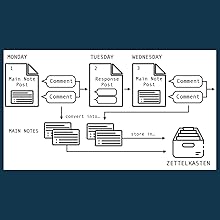
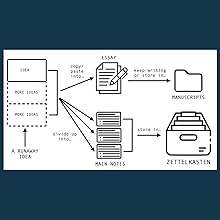
Writing short notes and connecting them to build up to longer work. This is the simple but profound method that many writers have found very helpful. But It's a lot easier to make notes than it is to do something creative with them. And when I started with this 'Zettelkasten' approach, it was frankly hard to understand. I had to piece together my own system, wading through confusing blog posts and videos, often made by people who hadn't really grasped the idea and who hadn't actually written much themselves.In 'A System for Writing' the author shares his deep experience of writing and publishing. He distills the essence of the Zettelkasten note-making approach, without digressing into unnecessary philosophy or anecdotes. Some people like making notes on paper or card, others prefer digital tools. This book doesn't try to enforce one tool over another. It presents a system that can work in multiple contexts and is quite timeless.The book does exactly what it promises. It describes a system for writing, from first note to finished book, and a clear process for moving from a vague idea to a full draft. Each chapter of the book has a checklist of things to do next, things to remember and things to watch out for. I found this really helpful.I wish 'A System for Writing' had been published years ago. But now that it has, I'll be recommending it to anyone for whom this quote (from p.21) resonates:"The note you just took has yet to realize its potential".I bought the paperback as well as the ebook because I wanted to keep a copy on my desk for reference and clear direction. I found it to be well designed and presented, with many note examples and flow diagrams to illustrate how the system works.
User
Excellent and practical book on the Zettelkasten.
Excellent. Great practical guide not only to the Zettelkasten, but for writing, and how to use the former to do the latter. There will be no confusion on how to do and use your Zettelkasten after reading this book.
User
Amazing. Clear. Actionable
I read Bob Doto's book in two days.The book is impressively clear. There’s no comparison with How to Take Smart Notes.One thing this book won’t receive as a review is the usual phrase you sometimes see: "this could have been a blog post." Every chapter and paragraph has a clear purpose. Each is developed concisely yet thoroughly. It leaves you feeling like you’ve understood that part and makes you feel ready to tackle the next chapter.I’ve implemented what the book suggests to some extent because my Zettelkasten is still quite small (around 30 notes). Yet, by following the exercise it suggests for writing a blog post, I managed to write one for my blog. Up to this point, someone might say, "nothing too exciting," except that the topic emerged from reviewing the notes in my ZK—which is one of the things Bob says will happen once you’ve accumulated some material.Great book. I recommend it.Last year, before reading How to Take Smart Notes, I read Weinberg on Writing: The Fieldstone Method by Gerald Weinberg, which discussed his method called "The Fieldstone Method." Unfortunately, while I appreciated the book, I struggled to put it into practice because I couldn’t "find my stones." Bob Doto’s method resolved this issue, and I must admit that by following all the advice in his book, I don’t think there’s a need to buy additional books on the subject.P.S. I bought the Kindle version because the order for the paperback version was stuck for days. Amazon’s call center explained that when a book is unavailable in a specific warehouse, situations like this can occur. The Kindle version, however, is very well edited.
Trustpilot
2 days ago
1 month ago