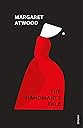
Handmaid's Tale, The
Product ID: 64736643
🌍Powerful feminist dystopia
📚Top #10 Dystopian Bestseller
🔥164K+ glowing reviews
Desertcart purchases this item on your behalf and handles shipping, customs, and support to UAE.
📖 Own the story that reshaped dystopian fiction — don’t miss out on the phenomenon!
The Handmaid’s Tale by Margaret Atwood is a #1 Sunday Times bestseller and a top-ranked dystopian novel. Set in the totalitarian Republic of Gilead, it follows Offred, a woman forced into reproductive servitude. With over 164,000 reviews averaging 4.4 stars, this multilayered feminist dystopia combines haunting storytelling with urgent social commentary, making it a must-read for anyone engaged in contemporary cultural discourse.

| Best Sellers Rank | #1,374 in Books ( See Top 100 in Books ) #5 in Dystopian Fiction #10 in Science Fiction Short Stories #11 in Humorous Science Fiction (Books) |
| Customer Reviews | 4.4 out of 5 stars 168,698 Reviews |
H**A
A Novel You Won’t Forget
The Handmaid’s Tale is a powerful dystopian novel that, like the finest works of the genre, holds a mirror to the failings of our own society. Through the rigid, theocratic world of Gilead, Margaret Atwood draws attention to several enduring concerns: 1. Control over women’s bodies 2. Loss of identity and individuality 3. Institutionalized patriarchy 4. The use of religion to justify oppression 5. Surveillance and the policing of behaviour 6. Resistance and the persistence of agency Atwood famously remarked that nothing in the novel was invented, but every element had its roots in real historical precedents. As one reads, one will trace these elements to actual events and practices. The first half of the novel unfolds at a measured, almost languid pace, immersing the reader in the oppressive atmosphere of Gilead. Please persist. Beyond the midway point, the narrative gathers momentum, becoming urgent and difficult to put down. A sequel, The Testaments, has since been published; I look forward to exploring it and reviewing it in due course.
M**S
I read recently and really amazed with it
‘It isn’t running away they are afraid of .We wouldn’t get far. It’s those other escapes, the ones you can open in yourself, given a cutting edge’ Handmaid’s Tale by Margaret Atwood was in my TBR list since long. Thanks to one of online book club,I read recently and really amazed with it. Plot: As it is well-known fact that it’s a story set in distant future in dystopian USA. Country’s President is killed and parliament has been dissolved. Army takes over charges of entire nation. It is not regular army but Republic of Gilead.Its totalitarian regime governed by men only. Entire story is narrated by protagonist Offred through tape recordings. Offred is Handmaid. She is thirty -three. Her only job is to breed. Offred is not her real name. In Gilead society, all the basic human rights and freedom from women is taken away. They become second citizens. They have been categorized into Wives and Daughters of Commanders,Handmaids,Marthas and Aunts. Their functions and clothes are fixed according to their category and strictly watched by Guardians. If they don’t follow their duties, they are either hanged on wall or sent out to die slowly of radiation sickness. Story begins when Offred is newly posted in a commander’s house. She lives with commander, his wife, two housemaids and driver of commander. Offred continually remembers her past throughout the story. She has a husband, a five year old daughter, a mother and a best friend. What became of them, she does not know. Handmaids are allowed to go for walk and grocery shopping once in a day in pair. Offred is paired with Offglen. At the begging both they pretend as real believers of Gilead but as time passes they realize they are haters. Offglen is belonged to underground network of rebels who help people to cross border and disappear.She eventually hangs herself. As the story progress, commander asks Offred to spend some time with him during night in his cabin in his wife’s absence. They talk,play scrabble and he asks for goodnight kiss. On the other hand, as Offred is not yet become pregnant,so commander’s his wife asks Offred to conceive child through his driver, Nick. This one night stand turns into passionate affair with Nick. They are not in love but they make love every single night. But at the end, a black car of Guardians arrives at commander’s house to take her away. So why she has been taken away? Who has made call to Guardians? What become of Offred eventually?? My Musings: As story is set in dystopia, it is obviously disturbing read. But I enjoyed it thoroughly. It was quite comfortable read for me unlike Disgrace by J.MCotezee which was not even dystopian novel. Handmaid’s Tale is considered as modern classic. But unlike other dystopian classics, this novel is narration driven rather than plot. Margaret Atwood had fascination towards dystopian set-up since her early days. She has read and great fan of Orwell’s 1984, Bradbury’s Fahrenheit 451, Huxley’s Brave New World to name a few. Offred seems real character. She hates her present and wantsto escape but does not have courage. As she has only one job of breeding and she is being taken care of by housemaids, she has plenty of time to spare. So she observes her surrounding and takes notes in mind. She has sharp observation skills. She remembers each and every minor detail of her daily routine and memories from past. She makes love with Nick without guilt as she feels something humanly in it in that in-human world. She even tells her real name to Nick. There are other characters but all are narrated through Offred. So we may not get their real persona. They might have come out as with different personalities if story would have been narrated in third person. The strongest and best part about the whole book is flow of lyrical narration. Lyrics are sad yet beautiful. Once in a while,we come across such rhythmic narration in fiction.It never loses its pace for a moment during entire story. Author has used so many fabulous illustrations ,metaphors to describe the pain and heaviness of situation. For example: “The newspapers stories were like to dreams to us, bad dreams dreamt by others. How, awful, we would say ,and they were, but they were awful without being believable. They were too melodramatic; they had a dimension that was not the dimension of our lives. We were the people not in the papers. We lived in the blank pages at the edges of print. It gave us more freedom.” (Page 89) The only part I did not like is its open ending.Author let readers to imagine the ultimate fate of Offred.It would have been great,if we could know Offred’s destiny. After reading this book I felt so grateful that I live in a world where such things are only on papers! So grab this book if you want to witness dystopian painting of pain painted by one of the greatest artists alive today.
G**I
Thought provoking dystopian fiction/ beautiful metaphorical language
📌"there was little that was truly original with or indigenous to Gilead: its genius was synthesis." . . . 📌Some excerpts I highlighted: 📌believe in the resistance as I believe there can be no light without shadow; or rather, no shadow unless there is also light. 📌But who can remember pain, once it’s over? All that remains of it is a shadow, not in the mind even, in the flesh. Pain marks you, but too deep to see. Out of sight, out of mind. 📌How easy it is to invent a humanity, for anyone at all. What an available temptation. 📌A rat in a maze is free to go anywhere, as long as it stays inside the maze. 📌You can’t help what you feel, Moira said once, but you can help how you behave. 📌I wish I knew what You were up to. But whatever it is, help me to get through it, please. Though maybe it’s not Your doing; I don’t believe for an instant that what’s going on out there is what You meant. 📌I feel very unreal, talking to You like this. I feel as if I’m talking to a wall. I wish You’d answer. I feel so alone. 📌Better never means better for everyone, he says. It always means worse, for some. 📌The more difficult it was to love the particular man beside us, the more we believed in Love, abstract and total. We were waiting, always, for the incarnation. That word, made flesh. And sometimes it happened, for a time. That kind of love comes and goes and is hard to remember afterwards, like pain. You would look at the man one day and you would think, I loved you, and the tense would be past, and you would be filled with a sense of wonder, because it was such an amazing and precarious and dumb thing to have done; and you would know too why your friends had been evasive about it, at the time. 📌With that man you wanted it to work, to work out. Working out was also something you did to keep your body in shape, for the man. If you worked out enough, maybe the man would too. Maybe you would be able to work it out together, as if the two of you were a puzzle that could be solved; otherwise, one of you, most likely the man, would go wandering off on a trajectory of his own, taking his addictive body with him and leaving you with bad withdrawal, which you could counteract by exercise. 📌Why did they buy so many different clothes, in the old days? To trick the men into thinking they were several different women. A new one each day.” 📌By telling you anything at all I’m at least believing in you, I believe you’re there, I believe you into being. Because I’m telling you this story I will your existence. I tell, therefore you are. 📌And so I step up, into the darkness within; or else the light. 📌“Our big mistake was teaching them to read. We won’t do that again.” 📌As the architects of Gilead knew, to institute an effective totalitarian system or indeed any system at all you must offer some benefits and freedoms, at least to a privileged few, in return for those you remove. 📌He could, of course, have assassinated her himself, which might have been the wiser course, but the human heart remains a factor, and, as we know, both of them thought she might be pregnant by him. What male of the Gilead period could resist the possibility of fatherhood, so redolent of status, so highly prized? 📌As all historians know, the past is a great darkness, and filled with echoes. Voices may reach us from it; but what they say to us is imbued with the obscurity of the matrix out of which they come; and, try as we may, we cannot always decipher them precisely in the clearer light of our own day. 📌I hunger to commit the act of touch. 📌There is beautiful metaphorical language even though in tragic dystopian scenarios 📌The ending is uncertain, a Cliff hanger Trigger 🚧warning: animal- cat murder and suicidal ideations. I read the kindle edition.
C**E
Great
Arrived in perfect condition, the cover is same as shown
S**W
Offered you wonderous yet unknown creature
BOOK REVIEW: HANDMAIDS TALE by MARGARET ATWOOD TITLE: HANDMAIDS TALE AUTHOR: MARGARET ATWOOD PAGES: 320 PUBLISHER: Vintage ISBN: 978-0099740919 GENRE: Contemporary Classic/ Dystopian IF I COULD REVIEW IT IN A SINGLE LINE: Offered you wonderous yet unknown creature THE REVIEW: Every once in a while we come across that has a very beautiful narration, a bang on plotline and an even better recommendation but it still just does not stick well. I’m sorry to disappoint you if you are of the many admirers of the book but it just does not my cup of tea. The book is set in a near future dystopian alternative US which is governed by army, there is no president but a union comprising just of men and in this land the women are second citizens, the army is called Republic of Gilead. Offred the protagonist who narrates the entire story is a handmaid, 33. Her only job is to breed, she is what remains of the only viable women in the state. It is her job, her duty, her virtue and her life. In this world women have no rights but rather are accessories I’d say. They are categorized as wives and daughters of the Commanders, Handmaids, Marthas and Aunts. They all have duties according to their faction and clothes according to their duties. They may either choose to abide or be sent to live beyond the perimeter in the land plagued by radiation. Offred is sent to live with a certain commander and his household, she had a daughter, a husband and a life; she remembers them fondly in her memories. Offred’s pair Offglen is her companion during visits to the grocery. She is part of an underground network of rebels but she eventually hangs herself. The commander starts spending more and more time with Offred and they are eventually drawn toward each other; on the other hand as Offred hasn’t conceived yet the wife suggests her to do so with Nick which turns into a passionate love affair. The last scene shows us Offred being taken away in a black van; what became of her we’ll never know. Now for what I did not like about the book. I’ve always been a fan of contemporary fiction and hence picked this book up because of the hype surrounding it. I tried to but couldn’t fall in love with it. The writing style and presentation was a tad bit edgy and factual or rather cold and aloof for my tastes. Everything else about the book was love. I loved the story; the climax and the beauty of a ending. The transitions between when Offred was in the present and when she was thinking of her past had me in and out of the sync of reading. Cover: 5/5 (I own the beautiful hardcover edition of this book) Title: 5/5 Characters: 4/5 Language: 5/5 Story: 4/5 Writing and Presentation: 2/5 Overall: 3.5/5 I voluntarily reviewed a copy of this book for @thatbooknerdyouknow. This review is my own and hasn’t been influenced by anyone else.
A**R
A classic, always recommended
Margaret Atwood's "The Handmaid's Tale" is a haunting masterpiece that delves into a dystopian world with poignant brilliance. Atwood's intricate narrative weaves a tapestry of oppression and resilience, forcing readers to confront societal reflections. The protagonist, Offred, becomes a symbol of defiance in a theocratic regime, challenging norms with quiet strength. The thought-provoking exploration of gender, power, and autonomy is both chilling and captivating. Atwood's prose is a literary marvel, leaving an indelible impression that lingers long after the last page is turned. This classic is an essential read, resonating with timeless relevance.
A**R
Sacred vessels, ambulatory chalices…..
“The control of women and babies has been the feature of every repressive regime on the planet”. Many years back, when my sister and I were getting ready in the morning to drive off to office, gulping down our breakfasts, Mom said – you don’t know how lucky you are. I recalled her words as I read The Handmaid’s Tale. Initially, I didn’t want to read the book. I prefer stories about real people, real events; this was a novel about a dystopian society sometime in the twenty second century. Who the Rulers are is unclear; they are referred to as “The Eyes”(like Big Brother in the novel 1984), and the country as “Gilead”. The protagonist is a woman (whose real name we will not know) who is attached to a powerful man called Fred; hence her name – Offred. As a woman, imagine a society where - 1) What you wear is decided by the authorities, and it includes white flaps like blinkers on the sides. Make up, cosmetics, creams and lotions are out of the question 2) Your body is not your own, but merely a child-bearing device for the rulers – a “ambulatory chalice”, a ”two-legged womb” 3) Your partner is chosen for you – and no, he is not the man you love, but the husband of another older woman who is unable to bear children, and she “supervises” your lovemaking with him. He is a powerful elderly man of the Ruling Class, who needs to procreate, but he is never your soulmate. Your husband and child are taken away from you. A particularly grotesque scene of Offred coupling with Fred, while being held down by his wife Serena’s wrinkled hands, will remain in the reader’s mind for a long long time to come 4) Once you fulfil the sole purpose in life, which is to produce a baby, the baby is taken away from you, and you are sent to another Commander to be hopefully impregnated again. Once your childbearing years are over, you are send to “the Colonies”, to labour and toil till the day you die 5) You are not allowed to read or write. Books, magazines, Scrabble all are forbidden pleasures. Pens and pencils are distant memories, and no details of this grotesque society can be recorded, to be read by future generations. It is world in which a tiny scribble in a dark cupboard can be source of endless speculation and interest – and sustenance. 6) Forget work, forget professional qualifications - your name and very identity is taken away from you; you just “belong” to one of the Commanders – OfGlen, OfWarren, OfThomas, you are his handmaiden, his child-bearing device 7) Sex is not to be enjoyed – it has one sole purpose, which is to procreate; arousal and orgasms are things of the distant past 8) Taking your own life is not an option available to you if need be – there are no ropes, knifes or sharp objects around, all have been removed 9) If – god forbid – you commit a crime – try to run away, attempt to murder your partner or his wife, etc. – you will be hanged to death, and your body publicly displayed on the Wall It is a horrific story, of the complete repression of women, of their total subjugation, of negating their very existence. Stark, obscene, grotesque, horrific, nightmarish – these are some words which can describe the Gilead society. But these words are not enough to recount the horrors. And yet - it is also a story of hope. Because, however oppressed a society is, even when all freedom is taken away from us, the freedom of thought cannot be taken away or controlled. In an act of unimaginable bravery and incredibly brave defiance, Offred actually records her story, the misery she has gone through, in a stack of old tapes – overwriting songs of (amongst others) Boy George and Elvis Presley (oh, the irony of it!), to be discovered decades later. I am glad that I read the book. Atwood is a fantastic writer, and it is a novel of breath-taking imagination and creativity. But more than that, the book expanded my mind. Don’t take your freedom for granted. You were right, Mom. I am glad I am a well-educated, independent woman in a free democratic country. Yes, we have come a long way, baby. But - who knows what the future holds?
D**Y
Scary and powerful
Most of the people already know about it and have read the book so I thought I would just do a post on why I'm obsessed with this book rather than a review Margaret Atwood calls this speculative fiction,which can be utopia or dystopia, this one is a dystopia but different from other books here,the central character remains a woman,not as a wife or a lover but as a woman,who remains hopeful and empathetic even after she lost everything,her family,her life and even her name. She goes by 'offred' which indicates she is 'of fred' the commander Fred or she is 'offered' to make progeny for him. Throughout the book her subtle heroism shines through like after the 'ritual' which is basically a rape, she thinks 'this it worst for her or the commanders wife'. Alsoshe empathise with the commander and her friend Moira,for whom she expects to tell a better story but she can't. And her hope - when she applies butter to her skin in the hope that one day she will be loved again. The book ends without her whereabouts but we do know that her story survives "If it's a story I'm telling, then I have control over the ending... But if it's a story, even in my head, I must be telling it to someone You don't tell a story only to yourself. There's always someone else. Even when there is no one" .
L**V
4.5 stars
am still struggling to put my thoughts into words and sentences that make sense, and thousands of reviewers have done a better job than me, but I had to try. I can’t believe this was written 40 years ago. It feels as much a dystopian tale as a warning about what could happen if things continue on their current course. This book is scary because it is believable, even though it is meant to be a dystopian fiction. The United States is no more; it has become Gilead—a misogynistic nation led by religious beliefs. In a world where the birth rate is at an all-time low, the solution they propose is to force all women who can conceive to become a Handmaid. The Handmaid’s role is to be a physical vessel for a baby. She is to be given to a rich family if the wife is barren. The Handmaid’s only purpose is to become pregnant with the man’s baby and birth a healthy child so it can be given away to the barren wife and her husband, and the Handmaid is sent to another household. If a Handmaid fails to become pregnant after a while, or if she tries to form connections with anyone, she is sent to the colonies. If a Handmaid tries to escape, voice an opinion, or become anything more than an object in the house (for it is what she truly is), she can be sentenced to death. I’ve been wanting to read this book for years, but I never took the time to do it. Honestly, it was hard to read it now that I have kids, especially with a baby at home. It did make the story even more impactful, though, so I don’t know if it’s a good thing or not that I read it while having young kids. Every time Offred mentioned her daughter, who was taken from her, or when we were reminded of the fact that Handmaids had to give away their babies, I had to take a little break. I can only imagine the utter despair they must have been feeling, and it made me upset just to think about it. It’s a parent’s worst nightmare. Margaret Atwood's style is unique. It took me a little while to get used to the quick changes from present to past, on the same page sometimes, and the vivid and sometimes poetic way things and feelings were described, but felt a little exhausting to read at the same time. Margaret Atwood’s prose is beautiful, and she conveys the main character’s emotions so well. I can’t really describe how special and beautiful it is. It’s something you need to read for yourself to fully understand how everything has meaning, and how she gives life to details in a way that creates a dark book with poetic writing. The writing is effective and brutal even at times. Margaret Atwood drives the point home and makes sure we realize how desperate, lonely, and full of grief and anger Offred is. What I liked the most is how it’s all showing and no telling. We discover what happened through short flashbacks and have to use contextual clues and hints dropped in conversations to understand the situation Offred is now in, what her life before was, and what exactly happened in between. There are no info-dumps; it all comes in time through the storytelling. Offred’s flashbacks show us how insidious and clever the higher-ups of Gilead were. It all began with propaganda and speeches, until it became so much worse. Until women suddenly had no access to their money anymore, nor had the right to work, meaning they were totally dependent on men. After that came the arrests and separation of families, the coercion, the xenophobia, segregation, and every other horrible thing that was done in the name of building a better society. Gilead’s people truly believed they had the moral high ground and that it gave them the right, the mission even, to enact all of those horrible changes. In Gilead, women’s only value resides in their bodies’ ability to procreate. Wives are allowed more rights and live a life more similar to what they were used to before. But Handmaids lost everything. They have no name, no rights, no identity anymore. They belong to the government, to be passed around as they see fit, in the hopes that they will be able to bear a healthy child, only for this child to be given to a rich family “more apt” to care for them. I can’t imagine how it must feel to have nothing to hold onto. Handmaids are not allowed to read or socialize; they are no one, known only by their owner’s name (Offred, Ofglen, Ofwarren), as if they were merely a temporary possession. Submission and acceptance of the unacceptable was the only way for Offred to survive. It was heartbreaking and scary to see how the characters tried their best to survive, to the point where this new reality became almost normal for them. Many times, Offred said how she was shocked by a show of skin or a colorful piece of clothing, only to then stop and remember that she used to dress this way, too. She would remember little details of her previous life, things that seemed so unimportant at the time, that she took for granted, but that she now misses, such as hand cream or the right to wear colors or look around her when she is outside. One part that struck me was how she said that she wished Luke were there so she could pick a fight with him. She is so desperate for her old life that she even misses the fights with Luke, because if they fought, it meant that at least they were together, equals, allowed to pick who they spend time with, and allowed to voice their opinion. All things that Offred doesn’t have anymore. It was also jarring to hear Offred say that what was happening to her was not rape, because she decided to be there. But the choice she had was to either become a Handmaid or be sent to the colonies, where her life would have been even worse. She did what she had to do to survive, but they presented the situation in a way that made the Handmaids believe that, in the end, it was their choice, so it was not truly sexual assault. Even though they had no say in who they were sent to or when they were to have sex with them. The government managed to rationalize the fact that the Handmaids were being raped, selling the idea that it was their purpose as women who were able to procreate, and the poor Handmaids were so scared and with no power left, they ended up half believing those lies, and half accepting that it was the better option for them to comply and remain silent. The rest of the society also took it in stride and accepted this new reality without much opposition, it seems. I don’t know how I feel about the ending. On one hand, I like how it keeps us guessing at what happened, and how it makes it impossible to stop thinking about it. On the other hand, I needed more information on Offred and what happened to her. I feel that the story ended just as the plot was picking up. Not that the plot was bad before, butit was mostly centered on Offred, her new reality, her past, and how she ended up in The Commander’s house. I love how it showed us Offred’s depth and layers, and how the author imbued her book with the hopelessness of Offred, but I was also eager for more action and more of an underground network/rebellion vibe. Thankfully, The Testaments seems to give us some answers about what happened to Offred, so I will be picking this one next. This is an experience. A unique book. The plot is not the most elaborate, but the world-building is so intense and frightful because it is not so far-fetched with the way things are going in the States, and Offred feels so real, it is impossible not to finish this book and think about it for a while. It is thought-provoking for sure, and while it made me angry, sad, and it also freaked me out a little at times, I am glad I finally took the time to read it.
M**R
Süpersiniz :)
Çok ilgili ve kibar bir satıcı :) Hediye kitap için çok teşekkür ederim :))
E**S
Great
It came impeccable.
E**S
otimo produto
Achei que era maior kkk de resto tudo certo
R**N
Perfect and prescient for these times. READ it.
I will admit - Over the years, 'Handmaid' was one of those books everyone had told me just HAD to be read - but with the clear discomfort they'd show in saying that, I always thought - Nope; not for me. I'm just not one for the whole dystopian thing; I need to see some light at the end of the tunnel. Fast forward to last week - this book being required for my daughter's Eng Lit class, and sitting available while I was at loose ends in a Starbucks for several hours - I thought, Why not?... and how glad I am, that I had those few hours. Wow. I was gone, hook line and sinker, from the first page on. Handmaid is set in, yes, a dystopian future in which women's place in the world has been subverted, through various events which resonate awfully closely with current times. The story picks up at the moment when Offred (a concatenation of her "owner's" name and her position in this society) is assigned to a new home in a city in America, for reasons that become all too clear within a few short pages. Her experiences within this new environment, interwoven with her recollection of her past before this societal apocalypse, unveil themselves like the layers of an onion - a never-ending interweaving of recollections and current experiences which, in their close parallels with so much that seems to be happening in our current world, make it not just an uncomfortable read, as so many other reviewers have said; but an eerily prescient one for these times. I could go on about that aspect of what makes this such a valuable read for any person over the age of 10 years old, but I'm quite sure many of the 1,000 + prior reviewers will have spoken to that far more effectively than I ever could. But for me, what makes this book so great is the Voice that the protagonist gains as she struggles in such a harsh, unforgiving, and shockingly cruel environment - the brutal honesty with which that voice speaks to the horrors and impossible personal choices that any of us would have to make, faced with such a savagely misogynistic society. There is no turning away from those realities in this book; Offred is, clearly, no better than any of us; but, she is, perhaps, more honest about her choices than any of us would ever manage to be. She has no roads but dead ends; no feelings but pain, isolation, and tragic loss; in a society which both reviles her and yet absolutely, completely, stunningly, needs her. And yet. There is compassion - much compassion - in this book not just for Offred but for each of her persecutors; and a perfectly clear view, of each person in Offred's life, from the patriarchy which dictates every aspect of the lives of the Americans; to the women with whom she is forced to share the household; to the man who runs their lives - and in theory owns Offred, body and soul. Margaret Atwood has managed to capture the complete horror of this situation and yet the complete spectrum of needs and innate humanness - warts and all - of each of the players in this world, speaking with true sight not only about what they each do, but the real WHY of it, like a series of ornate but utterly constrained chess pieces moved about in a deadly game by unseen hands. Atwood's brilliance with the written word, the layers of meaning she assigns to so many individual words, is a both a challenge and a complete delight, no matter how difficult the topics she makes us consider. Each page is like unwrapping a gift of many layers of brightly colored paper, never knowing what you will ultimately find inside: something to treasure, or something to fear. Offred's voice and her observations of self, other, and society are so clear and beautiful, so bleak, sad and yet hopeful - so compelling - in making us see these people. There are many phrases and visions Atwood has generated that will stay with me, now, for life. I cannot say I am in all cases glad of that - but I know i am richer for it. And in reading many of the current, more negative responses of the Amazon reading community, I cannot help but wonder if their dislike of the book is in many cases driven precisely from Atwood's artistry with words. She holds up not a picture for us to view, but a mirror to reflect realities that in many cases no one in their right mind would want to see - they are far too close, too personal, too true. And yet - we MUST look. I do not see, as some others do, a depressing endgame in this book; quite the opposite. Offred's determination to survive no matter what the cost and her slow but relentless growth to her own form of power and eventual rebellion, is not so much a story as a roadmap. We could all do well by, like Offred, looking with clear eyes at this dystopian imagining. If, at the end of the day, this book leaves you uncomfortable or depressed or angry - good, if at the same time it also manages to leave you unsettled. Atwood's intent was never to entertain you but to inform you - and that, she does with a master's deft hand. Three days and counting. What will we learn in Atwood's new book? I look forward, with a perfectly uncomfortable blend of anticipation and anxiety, dread and hope, to the answer to that question.
Trustpilot
2 weeks ago
2 months ago