


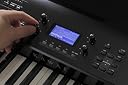
MP7 Stage Piano
Product ID: 7188166
Details
- BrandKawai
- Number of Keys88
- Skill LevelProfessional
- Special FeaturePortable
- Age Range (Description)Adult
🎶256 sounds
🎹88 keys
🔊USB audio
Buy anything from 5,000+ international stores. One checkout price. No surprise fees. Join 2M+ shoppers on Desertcart.
Desertcart purchases this item on your behalf and handles shipping, customs, and support to UAE.
🎶 Elevate your performance, ignite your passion!
The KawaiMP7 is a professional 88-key stage piano and master controller designed for musicians seeking high-quality sound and performance. It features Harmonic Imaging technology, USB audio connectivity for recording, and a robust polyphony of 256 notes, making it ideal for both live performances and studio recordings.
| ASIN | B00J5J6N5I |
| Age Range (Description) | Adult |
| Age Range Description | Adult |
| Brand | Kawai |
| Brand Name | Kawai |
| Connectivity Technology | USB |
| Connector Type | usb |
| Customer Reviews | 3.9 out of 5 stars 11 Reviews |
| Included Components | IEC Power Cable |
| Instrument | Digital Piano |
| Item Dimensions | 53.3 x 13.3 x 6.8 inches |
| Item Weight | 60 Pounds |
| Manufacturer | Kawai |
| Manufacturer Part Number | MP7 |
| Model Name | MP7 |
| Model Number | MP7 |
| Number of Keys | 88 |
| Power Source | Electric |
| Skill Level | Professional |
| Sound Profile | Rich and Detailed, Diverse Sound Library |
| Special Feature | Portable |
| Special Features | Portable |
| Style | Modern |
| UPC | 888365088877 |
| Unit Count | 1.0 Count |
S**E
What's a Kawai: A Stage or Studio Piano for Pianists.
This Kawai MP7 replaces a Studiologic keyboard that failed after 3 years. I spent a lot of time shopping, testing Yamaha, Roland, Korg, Kurzweil and even high end Casio units. I learned to play on Steinway and a C. Bechstein, and have never liked the light, mechanical feel of Yamaha products (either acoustic pianos or electronic imitators). While Yamaha has improved over the years, the touch is still far too light and "clicky" for my taste. Last time around, I bought a Studiologic purely because of the heavier weighted feel of its Fatar keybed. What I didn't bargain for was its very poor MIDI implementation. To be honest, I was relieved when it failed and I could justify its replacement. ACTION The Kawai MP7's action is not quite as heavy as the Studiologic/Fatar keybed, but it is smoother and has a better sense of control (for those who know acoustic pianos, it's more Bechstein than Steinway. While the key action varies (as do acoustic grands) from lower to upper octaves, the action is very well regulated, feeling as smooth and responsive in the lower octaves as the high. Unlike the Fatar, there is no side to side key wobble. The touch is faster than my fingers. The keyboard does not get in the way of fast 32nd note runs, trills and repetitions. The company says that its three sensor action helps this. I just know it works. SOUND Though I use this as a keyboard controller in my studio as a composer, I'll note that its internal sounds are very usable. The default piano is a rich Grand that sounds a bit lighter than a Steinway, but much better than any acoustic Yammer or for that matter Kawai instrument I've heard. The MP7 also offers a variety of sample based instruments ranging from lighter jazz style (read imatatio Yamaha) to a variety of electronic piano styles. The implementation of organ sounds is good- in addition to the standard fare of Leslie and Hammond, the MP7 also offers a (limited) variety of Baroque, Romantic and even Stage organ stops. The keyboard can be changed electronically to on/off (as opposed to velocity sensitive) for organ work- a welcome ability that make organ play much more realistic. FINDING THINGS The user interface is split between a menu driven setup system and button based presets. Out of the box, it never takes more than three key touches to reach an instrument. Using the menu based system you can create multiple single button presets, each creating multiple layers or zones of instruments, efx and reverb parameters along with keyboard touch and voicing.. It's more than I need, but I can see its usefulness in a stage or club setting. Overall its a well designed and implemented system, but oh, for a touch screen. It flies now, but with a well designed touch screen this beast would soar! REVERB & EFX Each layer or zone can be individually set for Reverb using a system that reminds me a bit of Logic's "Space Designer." Its very straightforward and quite capable. Likewise a variety of EFX and filters (chorus, flange, phaser, various equalisers etc) can be applied locally by zones or layers or globally. MIDI MIDI implementation is very solid offering up to 4 zones or layers and reasonable controls. It may be wired through MIDI ports and/or USB. It was not designed to be the be-all and end-all of midi controllers- but its MIDI capabilities are very useful and functional out of the box. You can also go under the hood and customize a variety of MIDI implementations. I supplement with a dedicated controller when mixing on Logic, but for composing or performance it more than capable. CONNECTIVITY MIDI and MIDI via usb are both available (and can be used simultaneously), the addition of a MIDI Through port is a great addition. The built in recorder can write via a dedicated port to a USB flash drive as either MIDI data or decent quality WAV. There are 1/4" ports for a true 3 pedal piano foot unit, plus an "expression" controller, though only single pedal is supplied (: . There is an additional stereo set of 1/4" line level analog signal inputs. BUILD It's big, a bit heavy and the fit and finish is superb. The case is metal with wood end caps. Buttons are backlit and have just enough "click." Sliders are smooth and predictable in response. The rotaries are small, but have a good feel. My only complaint is that the lcd screen is a bit small for a keyboard with this set of capabilities. I would have paid a few hundred more to have a 7 or 8 inch touchscreen. CONCLUSIONS I can't imagine any pianist looking for a stage or studio instrument who would be unhappy with the MP7. The MP7 is very, very well done in terms of fit and finish, and light years ahead of the competition in terms of touch. It offers a solid implementation of sampled pianos and organs along with a usable variety of pads and other instruments. No, it doesn't offer two thousand, mostly unusable voices. There are no kiddy additions. I've found nothing that I can't imagine being used in a club or stage situation. It's MIDI implementation is generous. As a classically oriented composer, with the addition of a small controller (I use a Novation SL) the MP7 is more than adequate for my work with Logic X. Working in Finale or Notion, it needs no help. It makes a great single keyboard for controlling Hauptwerk (pipe organ samples) allowing me to split the keyboard with 2/12 octaves as the pedal and the remainder as two or three alternating or layered manuals with an organ-like on/off keyboard (albeit with a piano touch). Am I impressed? Absolutely. Kawai deserves its growing reputation as a builder of fine keyboards.
S**D
Good concept, terrible implementation
Just received the piano yesterday and was very excited to give it a try. My enthusiasm quickly diminished. The overall quality of the product is very poor. Starting with the cheap LCD display, which has weird shadows and brightness unevenness all over, like the first LCDs from the '80s. The keyboard response varies from key to key, totally uneven throughout the entire range. Same with the knobs and sliders. The internal system is very slow, sometimes have to wait for 10 seconds for a slider to take action (I upgraded the firmware to the latest, 1.14). On non-piano sounds, when I hit a chord gently, then further push the keys, the sound gets louder which is very annoying, but probably this could be turned off, I just didn't yet get too deep into the system yet. The sounds: well, the piano is OK, but not like something blows your mind. The rest of the sounds are just simply a joke: for example the pipe organ, the strings and the harpsichord are extremely bad. The harpsichord key release noise is a laugh - totally unlike the real harpsichord. Well, I'll give it a few more days of try and most probably will return it and look for another brand. The price is too high for this poor quality. It should cost around a grand, then it would be a deal.
M**8
Potentially Great Board with Terrible Quality Control
Perhaps I have just had bad luck with the MP7, but after returning the second one recently, I thought I would add some comments that might be useful for the buyer interested in this keyboard. On paper, the specs of this stage piano are excellent, particularly for the price. Triple sensor action, 256 note polyphony, 4 zone midi control, multiple sounds, and a solid metal case are desirable qualities in a modern board. For the price-though not inexpensive-you get a lot of really useful features. Compared to the Roland and Yamaha high end pianos, it would appear to be a good deal. The first unit I received arrived with a faulty LCD screen. There was a large and ugly black defect on a portion of the screen. The seller was quick to offer a replacement, but because the units were back ordered, allowed me to keep the piano until the replacement arrived. In the meantime, I got to know the piano. I have owned multiple digital pianos over the years, including the MotifXF8, the Tyros 4, Roland 700 and the Yamaha P155, so I have a general idea of keyboard feel. The Tyros of course is not a hammer action, but all the others are. I love the feel of the Motif, though it is not strictly a pianist's board, and I think the feel of the P155 is still one of the best. Of course, keyboard feel is a highly subjective matter. When I first started playing the MP7, I liked the action, but didn't love it. There was a bit of looseness to the keys that I didn't like. More alarming, as I continued to play it-only in a home studio, no gigging-I felt that the keys were beginning to loosen up even more. Still, the playability was acceptable. I also noticed a couple of other things: though the metal construction of the frame and case seemed solid, the sliders and buttons did not feel particularly high quality. Each slider had a different resistance to it, some not travelling smoothly within their range, and the plastic buttons produced a sharp clacking when pressed, and did not seem to light up all that well. I also noticed that in the middle C scale, I could see a green light emitting from under the keybed. Not a deal breaker, but a bit distracting if the light in the room was dim. Overall, I thought the sampled pianos were quite decent, though if I am recording or performing, I use either Pianoteq 5 or Ivory. The replacement unit finally arrived a month later, and I put it through its paces. First, I noticed that the key action was noticeably tighter than the first unit. A good sign, I thought, perhaps Kawai has fixed whatever initial problems there might have been on a new product. The slider and button actions were still the same, and so was the presence of the green light under the middle scale. But after a month of playing, the keys action started to badly degrade. In the C-2 to C-3 range, where one would typically be playing with the left handed, a loud clacking developed, and it grew worse from day to day. This was only after a month of playing no more than an hour or two a day. In contrast, none of the Yamaha or Roland boards I have used have ever developed noise, and that is after years of regular use. Playing at high volumes, I would not notice the clacking, but at lower volumes it was quite evident. Whatever one thinks about the various bells and whistles in modern stage pianos, the one, single critical aspect is that the keys feel good to play. Otherwise you won't play, and you won't trust the instrument. I could put up with the sliders and the buttons and the green light, but I cannot tolerate a loud, sloppy keyboard action on a piano of this price. No one should, I imagine. So, the second MP7 has been returned, and there will not be a third. This is not an inexpensive piano, and to chintz on the one crucial aspect of the instrument-the key action-is inexcusable. It is disappointing, because the MP7 offers a wonderful balance of playable sounds, master controller capabilities, and tweakability that is unrivalled at this price point. I will replace it either with a Roland or a Yamaha, but neither of those offers the midi flexibility that the MP7 can boast. I would have happily paid several hundred dollars more for the same keyboard with a keybed manufactured to a higher standard. I did a bit of research online, and discovered that the quality control issues-at least on the MP7-are not unique to my experience. There are the glowing reviews by those who have the board for a few days, and then there are the ones who actually own it, and start to have problems. Until Kawai gets the quality control issues under control, I cannot recommend the MP7. It is made in Indonesia, as opposed to Japan, and unfortunately the defects show. If you are going to purchase it, make sure you buy from a good seller that is willing to take the board back and pay for the return shipping.
F**S
0
Please, I need help about it...
C**R
Awesome Sound and Features
I've owned my MP7 for just over a year, practicing with it at home and bringing it to church several times per month to play in a contemporary worship band. I've been absolutely thrilled with it. Here are my observations from a year of use... Sound and Action For me, the quality of the sound and the feel of the action are the most important considerations. The MP7's concert grand sound is the flagship of the keyboard. It sounds absolutely divine. There are plenty of youtube videos out there to experience it if you're local store doesn't carry one. A keyboard's action is a very personal choice, so I don't think you can read any review and decide if it's for you. I played Kawai, Yamaha, and Roland stage piano actions before making a purchasing decision. They were all top notch keyboards, but for ME, the Yamaha felt too mushy and the Roland (rd-800) was too heavy. I probably could have quickly adapted to either, but the Kawai had the balanced natural feel that I personally am used to in a piano. Build Quality I've personally had no problems with my unit. The keyboard is beautiful with mahogany side panels and otherwise all metal constructions. It's built like a tank. Unfortunately that also means it a bit heavier... about 43 pounds or something, and with my protective case I'm lugging around 70 pounds or so to bring this back and forth to church. I would prefer it to be a bit lighter, but then again I even more don't want it to be flimsy, so in the end I'm fine with the weight. Other Sounds The concert grand is the star of the show, but there are a broad variety of other sounds. You can't add new samples. But there are several other grand pianos, upright pianos, pop pianos, electric pianos, strings, brass, winds, bizarro synth sounds and all sorts of stuff. I personally would like a few more background pad options. Also, there are several full percussion sets, and the metronome feature has tons of different drum rhythms that you can practice with. Also, helpful for me, the metronome can also be silent, with alternating flashing lights on the control panel showing you the tempo. Drawbar organ I don't see this highlighted much, but it really needs it's own section..... the drawbar organ simulator is awesome. The sliders that you would usually use to set the volume of your 4 different instruments become virtual organ drawbars, so it's infinitely adjustable to get the sound you want. Custom modification of sounds You just can't fathom how well you can modify any and every aspect of every instrument. Whether you want the attack to be faster, slower, whether you want that sound to respond to the sustain pedal, or do something else when you press a pedal, or apply any number of special effects. I can't even do it justice to try to describe how much control you have over everything. Setups work great for live performance In church I need to be able to switch the keyboard to an entirely different setup very quickly, and I can do this with one button press. However there are a few features that are "universal" meaning they can't be saved to a particular setup, like the transpose setting. I actually wish I could set a transpose default to each setup. Little things Little touches also are nice... for example, unlike the roland rd800, the power cord is detachable, which makes it easier to transport and easy to replace the cord if it gets damaged. Also, the sustain pedal provided is super high quality, looks and feels just like a real piano pedal. They also make a three pedal version I just don't need that. I also like being able to plug in a usb stick and record my song as a wav or mp3 file, and you can play back the song and play over it, re-recording a new song as many times as you want to make a layered recording. I don't use that much but it's nice.
S**O
The keybed could be better, it is noisy
This could be just my sample, the piano action is very good but at first one G# started making a clicking noise when you release and it returns to the idle position as it is missing a felt. Now 2 B keys are making a clicking noise if you barely touch them left to right and barely move. If the clicking was in every key it would not be bad but since it is on 3 keys it is annoying if you play it at low volume. I own it for about a year but not using it too much. Other than that the control buttons have different responses when you press them, some are easier, some are harder. I own another brand keyboard for a much longer time and I never noticed those kind of annoyances. The sounds and electronics in general are good and never had any issue with those except a couple of times early on with older firmware. This keyboard has a lot of nice features so I am happy with it except for the keybed quality that leaves me a little worried as what will happen next.
A**R
Great piano
I am a bit baffled by some of the negative reviews. I've been a piano player & stage/studio musician for over 30 years so I've been through my share of keyboards. The action and build quality are superb. When gigging one of the most important and useful qualities for a keyboard to have is being able to quickly choose a sound from song to song. Being able to assign individual sounds to its own fader is monumentally efficient, and there are four. Let's be honest. It's rare that you would need more than that at one gig. Plus, you can customize each sound before assigning them. Even during a song, if it calls for a second sound, just pull its slider down and push another up, or combine each....that simple. If you need additional sounds they're only 2-3 clicks away to get to anything. I could go on but I haven't had one problem out of mine and couldn't recommend it higher. The grand piano is the richest with the most depth on the market, period. And no, I'm not affiliated with Kuwai nor am I being compensated for this review.
A**N
Incredible keybed, build and sounds
I’ve played everything. Kawai keybeds are unmatched if you want an acoustic piano feel! Sounds excellent, build is excellent, easy to operate!
Trustpilot
2 days ago
2 weeks ago