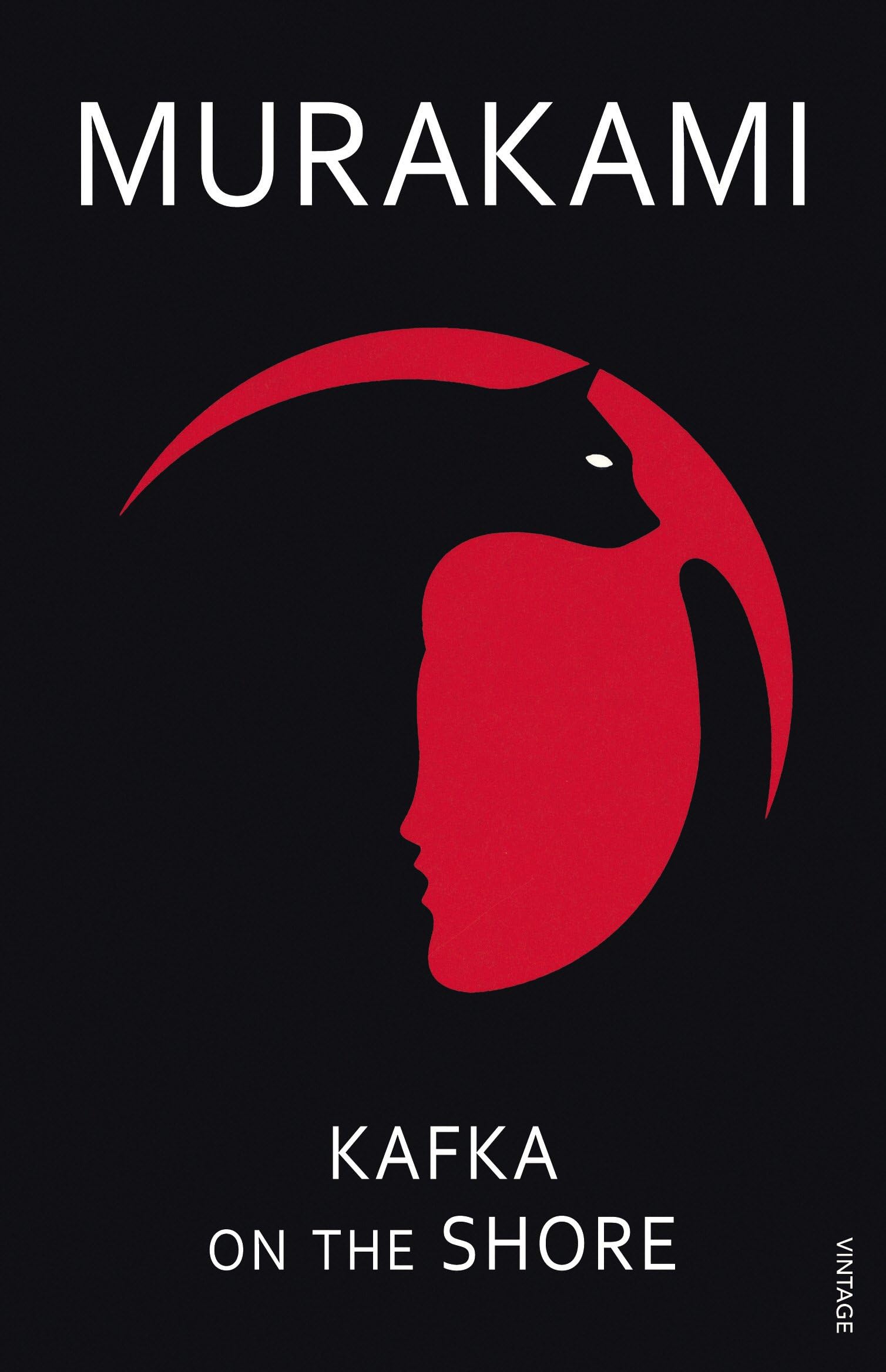
Kafka on the Shore
Product ID: 79620542
⭐4.4/5 rating from 21,000+ readers
🌌Blends surrealism & mythic themes
📚500+ pages of immersive storytelling
Desertcart purchases this item on your behalf and handles shipping, customs, and support to UAE.
🌟 Unlock a surreal journey that’s as intellectually thrilling as it is unputdownable!
Kafka on the Shore is a critically acclaimed novel by Haruki Murakami, featuring a dual narrative of a runaway teen and an enigmatic cat tracker. This 500+ page Random House Export Edition blends surreal fantasy with profound themes of identity, fate, and transformation. With a 4.4-star rating from over 21,000 readers and top rankings in metaphysical fiction, it’s a must-have for those craving a mind-bending literary experience.
| Best Sellers Rank | 10,002 in Books ( See Top 100 in Books ) 16 in Metaphysical & Visionary Fiction (Books) 593 in Dragons & Mythical Creatures Fantasy 638 in Paranormal Fantasy |
| Customer Reviews | 4.4 out of 5 stars 21,509 Reviews |
K**M
Highly recommended, you won't put it down
First of all, the gift edition hardcover is a stunning book which has fantastic art at the front. It is eye catching and has got several compliments by people. For the book itself, it is breathtakingly well written with an easy prose of writing. It makes the book spellbindingly hard to put down, you must resist the urge to finish it in one go unless you want to 😂. The way he writes, is easy to follow and read. It's not as dense as Norwegian Wood, perhaps because it is longer (500ish pages). It is still quite heavy in topics, intensity and themes. I loved the profoundness of the topics and story, although it won't be for everyone the themes can be overwhelming and very adult / mature. It's written in two perspectives where the chapters alternate between the two characters, which is an interesting take! The story was great and was my first surrealist book. It read well and the overall message was great. I'd reccomend it if you are willing to get past some adult themes and some unsavoury scenes (usually marukami stuff)!
N**S
My Mind Just Took a Journey
This was my first book from Haruki Murakami and though I was aware of the writer for some time I knew from what I’d read about him that his book were ones you had to work your way up to. His novels, from what I’d read, were not things to be lumped in with those we see in many of the best-of lists we see in literary publications and high brow newspapers. I personally think that this, I have to stress, is both true and a complement to the writer. I’ve read a lot recommended from high brow publications, I’ve read a lot of award winners, and very few of them were books that ever made me want to read another from the author in question. I’ve almost come to believe that a Booker prize, for instance, was a participation trophy rather than anything I should take seriously. Haruki Murakami’s Kafka on the Shore should never win any of these awards, not should it ever be on any lists of recommended novels. It has and it often is; but I think you get my point. Haruki Murakami’s Kafka on the Shore deserves better than to be lumped in with the high gloss trash that often inhabits these lists and ceremonies. There is something transcendant about Murakami’s work, something disturbing that niggles at the edges of the brain while symultaneously making the lips curl with laughter. This was the first thing that struck me about the work, in spite of its complexity and enigmatic nature, was how easy it was to read; how quickly the pages flew past and how much raw information sat in each and every line. I know that telling you what the story is about is ultimately self-defeating, but I guess I’ll have to at least try to give you something here. It begins with a young boy who calls himself Kafka and a journey he takes when he runs away from home. Kafka’s father, a renowned sculptor, has been murdered – initially we don’t known by whom – and at some point we know the police will be on Kafka’s trail. Kafka travels across Japan and finds himself at a small private library where he begins to spend his days. The world around him begins to shrink, and then expand in surprising ways until it warps enough to become alien, wonderous and frightening. Meanwhile in a tale told in alternating chapters we follow an old man with an affinity for cats who goes on his own quest and finally the two stories begin to entwine together like vines until you can’t tell them apart. Along the way we have talking cats and UFO’s, sinister governent projects and comatose patients. We also have ghosts and secret cities; and finally a strange fantastical rock that seems to tie it all together. It’s weird, yeah, and some might dismiss it as “just weird” but under the surface is a interconnected tapestry which makes it all very interesting. Who and what all the characters are is always in question, theres a common theme of disconnection that runs throughout the book where characters will change form, both physically and in spirit, or we will see a character from different points in thier lives… Did I mention time travel? ‘Cause theres a bit of that going on as well… So… Everything seems malleable and infinitely changing, and I’m certain that the next time I read the novel it won’t be the same book I read the first time. Alongside the constant change are other recurring themes, those of redemption, fate and how these two things can merge to make characters chase things both real and imagined. In spite of all its fantasy and surreal imagery theres something that struck me as very true floating amoungst all the lunacy. It struck a chord in me because its something I’ve been exploring myself in some of my own work; though admittedly I’ve not been doing it anywhere near as well. To me Kafka on the Shore argues that we are all changing, constantly and that the person we were yesterday was not the same person that woke up to this morning. I think it also argues, on some level at least, that our sins of the past may no longer belong to us and that it may not be right for the new us to hold on to such guilts. As for meaning I think the book will mean something different to whomever reads it. There’ll be similarities to what you might think its about and what I might, many similarities perhaps but as each thread of this tapestry connects to the next we would undoubtably see different connections and different results from the same raw material. Kafka on the Shore is like a thousand piece jigsaw that can be completed in multiple, perhaps infinite, ways; each way revealing a new journey that uses familiar themes and crossroads without being the same. In my view Haruki Murakami is incredibly lucky writer to manage this take, or – and this i far more likely – a truly gifted one. Once I’ve recovered and built up a little strength I’ll embark on one of his other journeys wrapped in paper; and to be honest I’m not sure if I’m hoping that the next one’ll be more involving or less. I’m not entirely sure my mind can handle another Kafka on the Shore any time soon.
K**A
Just go with it - a very surreal Japanese novel. Loved it.
Please note my review contains spoilers. I felt after reading this book it would have been helpful to know in some sense what was coming up. But if you're a reader who likes surprises (as I am not!) then please don't read it. A very strange, surreal book and a very interesting exploration of values, identity and accepting people for who they are. About a fifteen year old boy who runs away from home and establishes connections with other people at a library in the opposite side of Japan to where he has been brought up. He is on a quest though what he is searching for remains a mystery throughout the book. The most obvious things he is searching for are his mother and adopted sister who left when he was four. But he also seems to be searching for the meaning of life and to solidify his identity. He finds out that to be `the world's toughest fifteen year old' means to be able to open up your heart to life and love and to not be damaged in the process. Intertwined with his quest is a young lorry driver and Mr Nakata who is illiterate and due to a blackout when he was younger has lost the ability to form abstract concepts. He refers to himself often as not too bright, for the majority of the time he can however communicate with cats. They too have a quest that is to find the entrance stone, to open it and to close it again. The entrance stone seems to be the entrance to a mythical place, a place in between life and death for those people who are too tired to live but who also are not fully ready to die. Time has no meaning there and those people who are searching for something more to their life seem to end up there at some point. Once his father and his father's evil spirit have been forever destroyed, the boy named Kafka Tamura is able to go back home and resume his education. He goes back no longer feeling so alone and has established a firm connection with the library and the man he met there, Oshima. He also has found a family member, his sister, whom by coincidence also lives in Tokyo. Although still struggling over how to truly live, he takes solace in the painting which he found during his time at the library. He seems to be both the boy in the painting from decades before he was born and himself in the present moment. He will learn to live and love as the boy in the painting was able to and will continue his life cherishing his memory of Miss Saeki and the valuable lessons she taught him. Besides, he still has the boy named crow to turn to for advice if things go a bit pear-shaped. This is my attempt to make sense of an almost nonsensical, beautifully whimsical adventure-tale which has constant references to allegory and metaphor and which ends up pulling you inside a chaotically ordered sandstorm of words and meaning.
B**M
Masterwork
"Kafka on the Shore" was my first Murakami book. I picked it out of pure chance, with no expectations at all, as I didn't know much about the author or the novel. After reading it from end to end in just a couple days, I couldn't prevent myself from reading, one after another, nearly all of Murakami's books in the last two months. From the beginning, it captivated me in a way no book has in a long time. Sure this isn't a book for everyone, and with this I don't want to be elitist or say it requires a certain level of philosophical awareness or knowledge to enjoy it: on the contrary. It requires being able to open your mind and forget about constrains, just accept the story as it is being told to you. The book raises many intriguing questions and offers just a few ambiguous answers for them, and many point this as a "flaw", but in fact, it's the book main motive. This is an eastern tale, and if you're familiar with things such as Zen koans, you'll understand that the fact it doesn't provide the answers is not important, because the important thing here are the questions. What the questions do to you. What they stir, how they make you feel. If this book had stirred nothing inside me, I'd easily rate it three stars. Murakami's style is neat and simple, easy to read and beatiful at some times, but certainly not as breathtaking as that of, let's say, Mishima, just to compare to another modern Japanese writer. He builds a great main character in his own way but many other characters in the book seem to be "thematic constructs", just there to make a certain point, not feeling like live people at all. And like many others have pointed out, the female characters (and this applies to most of his work) are often unrealistic succubi, seeming projections of sexual imagination more than characters at all. If you can't stand any of this nor the idea of loose ends, or feel revolted at the mention of incest, read something else. However, the way I see it, art is nothing you can analyze so easily. You can't take part by part of this book technical aspects, rate them one to ten, then make an average, like if you were choosing which is the Car of the Year. Like the book itself says, sometimes it is an "imperfect" work which somehow touches you, while other "perfect" books you can admire, yet they really left you the same you were before reading them. You may fall in love with someone you hate. You may feel better in your old small crammed apartment than in a larger, new, beautiful house. I think this is a central key to understand Murakami and enjoy it: he's not trying to write "the perfect western novel". He negates such a thing may even exist with his way of writing, and proposes you an entirely different deal. A pretty good deal, if you ask me.
T**M
Kafka....wait what?!
I usually like to start a book review with a brief summary of what I just read. On this occasion however I am not 100% sure on where, or how, I would begin to describe the events of this book. The book largely revolves around two key characters, Kafka Tamura and Mr Nakata, who each have unique journeys within the realm of magical realism that Murakami has become so well known for. Expect plenty of WTF, cats, sex and humour. Do not read this book expecting a neatly wrapped up story with a definitive conclusion to all of the plot lines. You will not get anywhere near this. What Murakami achieves through this however is that you finish the book with questions which are mulled over and can help develop a better understanding of the novel…even if you need to go and read some interpretations of this. 4 weeks after finishing this book I’m still pouring over some points which I didn’t immediately understand The strongest part of this novel is the character development. Each of the characters that you spend time with has an intricate backstory which shines through in each of their appearances. I learnt to love, despise, empathise and at times pity a number of the characters within this novel. Each one is a part of a wider narrative which intertwines with other areas of the book even if just in a passing moment. Murakami manages to craft a beautifully vivd depiction of both rural, and urban Japan. As someone who has never stepped foot in Japan I found myself envisioning all of the extreme beauty and brutal flaws of the polar opposite environments. I could interact with the smell and atmosphere presented in each location through the vivd and enthralling scene setting.. This is truly the mark of a great author. “We’re so caught up in our everyday lives that events of the past, like ancient stars that have burned out, are no longer in orbit in our minds” I would recommend this book to anyone who enjoys a mind bender. If you like the idea of a surreal, beautiful and at times violent world in which a complex story develops, then this will be perfect for you. However, it isn’t a book for everyone. If you struggle to maintain an interest in long plots with the appearance of no direction then this might not be the book for you (although still give it a try, you might surprise yourself ). As I initially said, this book doesn’t really conclude but it takes you on the most interesting and unpredictable journey I’ve had in a long time. One of the only criticisms I have is that at times the author indulges too much in the sexual nature of the characters. This can feel like an unnecessary detail which adds little to the plot narrative. This sexual themes the book have the ability to make the reader uncomfortable, and this is likely what the author intended. Whilst not a complete problem, it may put some readers off. Similar books: The Metamorphosis - Franz Kafka The Stranger - Albert Camus American Gods - Neil Gaiman Wind Up Bird Chronicle - Hakuri Murakami 1Q84 - Hakuri Murakami Norweigen Wood - Hakuri Murakami Star Rating **** 4/5 Stars
M**N
An engrossing tale
This is a gripping tale. It appears to represent a kind of pilgrimage or rite of passage within a web of historical and personal memories, supplemented by literary references. Murakami is superb on missed opportunities because of the vagaries of time and space. The craftsmanship is superb, and some of the passages are compelling. The ability to portray horror is as impressive as the knack of delicate description. However, I felt that some of the references were contrived with the novel as a whole lacking. coherence.
R**.
Just roll with it and enjoy the ride
If you are happy with ambiguity, unanswered riddles and subplots that fizzle without obvious reason then this is for you, otherwise, steer clear. Any book with “Kafka” in the title is likely to be a bit Kafkaesque, and so this is. The backbone of the plot is an Odipeal prophecy; the child kills his dad and then sleeps with his mum and sister. The reader is taken on a journey of two intertwining storylines with much contradicting evidence of how the prophecy is going. Along the way, there is plenty of surreal humour, philosophical reflections, observations of the banal made interesting (and vice versa), riddles (many of which remain unsolved), and events that don’t move the story but still feel worthwhile. I thoroughly enjoyed it and will undoubtedly spend the next few weeks pointlessly trying to find the actual meaning. I suspect Murakami enjoys teasing his readers, mixing messages alongside surreal fun, or burying the meaning so deep it is unretrievable. I feel I have been played with, but it doesn’t matter; it provoked enormous interest in me. The enjoyment is in the chase, the fact I don’t feel I have made a catch seems incidental. The unanswered riddles are likely to annoy some readers. The reader is often offered two equally implausible answers/solutions to a riddle with both being possible within this kafkaesque world, and maybe both are simultaneously true in a Schrodinger’s cat sort of way. I had one gripe. Each character spoke with a distinctive voice, all synced perfectly with the context. That is all except one (Hoshino) who is oddly the character Murakami appears to want to be the most normal. To me he seemed fake; like a bad actor in a good film. Maybe it is a translation issue or another Murakami tease that I misunderstood, but it bothered me; every time Hoshino spoke I winced. In all other respects a full 5 stars. Many readers will be irritated by the unanswered questions. Murakami often insists you accept things as they are, even if nonsensical; you won’t get a better explanation other than “that is the way it is.” I loved it and will likely reread it, but I will likely be no wiser. Did the Odipeal prophecy play out? I think it does, and yet I don’t think so, or maybe it does and doesn’t at the same time... Many reviewers suggest, just go with it and enjoy the ride; sound advice.
M**A
Strongly recommended for anyone who appreciates a good story
Kafka on the Shore by Haruki Murakami is an absolutely brilliant novel which I thoroughly enjoyed reading. It deserved the highest praise by being awarded a literacy prize. From start to end, you are really absorbed in the novel and really cannot wait longer as to what sequence of events will happen next. The novel maintains high interest with reader, as it contains a well built up pace. Haruki Murakami has proved his class and genius as one of the greatest novelist to embrace his name within the literacy world. His style of writing and his simplified language is what makes this novel a pleasure to read. The novel gives the reader an insight in the Japanese culture narrated in a superb and compelling story. The story runs in parallel with two key characters which is runaway teenager Kafka and a mentally deranged old man Nakata who is illiterate, but has an unique ability to communicate with cats. But they are key suspects for a murder committed. The key questions are they the real murderers. It is you as a reader to find out the answer. That is the general gist of the story, without giving too much information away. The novel is beautifully descriptive about the main landscapes of Japan. It gives the reader a real flavour of what it is like living in Japan. You have the mountains, shore, beautiful buildings, huge highways and lively and ultra modern cities such as Tokyo. It feels like you are in Japan. The story is absolutely superb and enjoyable to read and you will be hooked to it for long hours. This is probably one of the best books I rate highly for my favourite books for this year. What I like about the novel is it styles, the way the characters are strongly represented and main plot. If you love and appreciate a good story, read Kafka on the Shore. I strongly recommend it.
B**D
I’ve met you before. In another land, in another library.
Well, this was impressive. I have read one other Haruki Murakami novel some years ago, that being Hard-Boiled Wonderland and the End of the World, and while I really enjoyed that book, this one I loved. And besides, I can feel echoes of that one in this one, and those kind of connections bring me great joy, whether I am projecting them or not. What to even say about this book? What to say about Haruki Murakami? His works have the interestingly dichotomous ability to mix feelings of the small and the large, the personal and the sweeping, the banal and the mystical. Often while reading I'll find myself thinking... "What the f***?" And I can answer this only with the mantra: "No idea, it's Murakami." Some people maybe can't get behind that and still enjoy the novel, but I love it. The bizarre occurs without explanation, and the dreamlike is commonplace. He leads you from one question to the next so effectively that even when you don't circle back around for the answers, you're having too much fun to mind. And Murakami's sheer skill... His prose is excellent by default, and ranges into the beautiful. He paints a vivid picture without being overly descriptive, and he allows you to sink into a sort of flavor of a mood. There seems to be a very human understanding that bleeds through onto the page, and not just in his prose but in his character work. He taps into the heart of things, and reminds you why life's simple pleasures are pleasures in the first place. This is a man who seems to truly live, a man who knows how to take his loves and interests and inject them into a story that sticks with you. Kafka on the Shore is at its heart the inexorable, tidal pulling of two disparate storylines. That of Kafka Tamura, 15-year-old runaway haunted by a dark prophecy, and that of Satoru Nakata, an old man who suffered a childhood affliction that left him... different. How these two stories interact and interweave will leave you feeling like you're reading a riddle at times. Thematically he is playing with dreams, imagination, and responsibility. The darkness of the human subconscious. Ghosts. Memory. Time. Libraries.... Honestly, I find the book hard to capture in words, futile devices that they are. There were sections of it where I even doubted the reality of what I was reading. I mean, my favorite character in the book was probably Colonel Sanders. Do with that what you will. So much of this story takes place in that dark, ethereal labyrinth of your mind that it feels like you can only accurately explain half of it. And that second, unexplainable half is where the true magic lies. Which is, I believe, why I'm so drawn to his stories; they leave much to the imagination, and there is plenty leftover to ponder. Nothing is so tantalizing as the unknown, and Murakami understands that deeply. But as strange as the novel is at times, it really is beautiful. Emotionally effective, to say the least. I want to use the word gorgeous, even. The character work feels genuine, borderline romanticized. And the entire work is so intricately interwoven that it feels like the kind of thing you could jump right back into when you finish, which may have even been Murakami's intention. If you can't tell by the unfiltered praise, I loved this book. It belongs on my favorites shelf, I think. I don't think it's for everyone. It was overtly sexual in a way that caught me off guard, and in a way that I can imagine will make some readers uncomfortable. There are also scenes of overt, sometimes shocking, violence. But I don't fault Murakami for exploring the dark recesses of the human experience, or of stories in general. In fact, I think it would feel strange were those areas of darkness missing. Having just finished, I have that same sort of melancholic regret that I sometimes have when I finish a Ghibli movie; a long journey well-ended, characters coming full-circle with lessons learned, a strange new world that I want to stay in a little while longer. Needless to say, I'll be reading more of his work. "Time weighs down on you like an old, ambiguous dream. You keep on moving, trying to slip through it. But even if you go to the ends of the earth, you won’t be able to escape it. Still, you have to go there—to the edge of the world. There’s something you can’t do unless you get there."
D**T
Glued pages
Even though the book itself is beautiful, I will be giving it a bad review because some of its pages were glued together, so they would tear when I opened them.
M**S
Exactly what I requested
Book in good
O**R
Metaphorical Journey
The book keeps me interested with the characters most of the time. Still having a lot of questions about the past of Miss Saeki, and the mission of Nakata but the book gave me a lot of reflection of our choices and it's impact on fate. Some things is just simply meant to be.
R**A
Excelente leitura!
O que falar do Murakami. Te leva para dentro de cada cena com maestria tal que o livro entra nos sonhos. Descreve os personagens e seus mecanismos interiores de maneira crua e transparente - reflete nossos defeitos e qualidades. Soma-se a isso a aula de música clássica!
Trustpilot
2 months ago
1 month ago