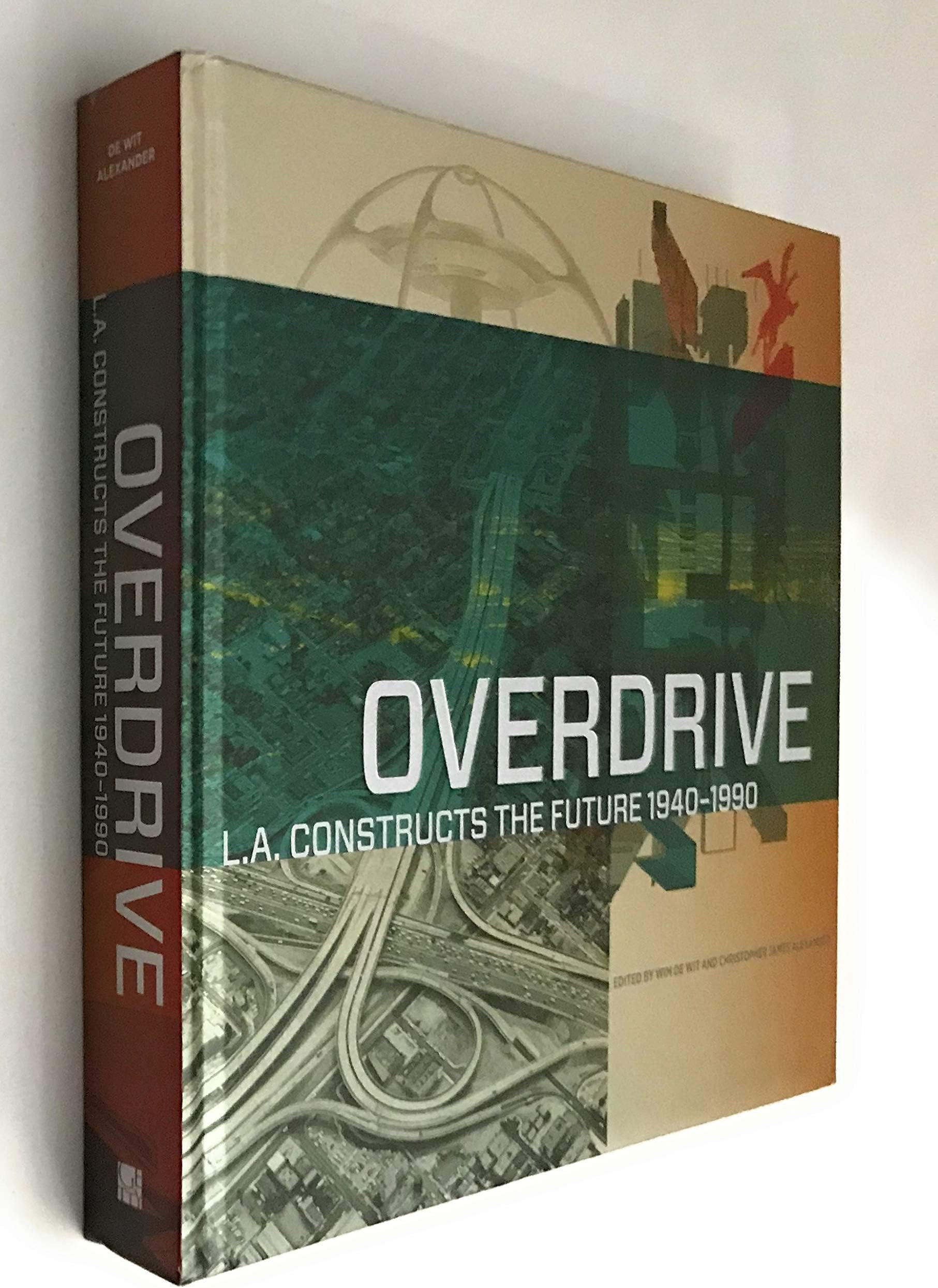

Overdrive: L.A. Constructs the Future, 1940–1990
Product ID: 8812766
Buy anything from 5,000+ international stores. One checkout price. No surprise fees. Join 2M+ shoppers on Desertcart.
Desertcart purchases this item on your behalf and handles shipping, customs, and support to UAE.
Overdrive: L.A. Constructs the Future, 1940–1990
L**Y
Extensive Examination of the Emergence of Los Angeles
This book provides an extensive look at the economic and social development of Los Angeles. It thoroughly presents this from numerous perspectives including the changes in architectural styles. This should be of interest to readers wishing to learn more about Los Angeles history.The following are notes from the book that may be of interest to City Planning students:Los Angeles, unlike European cities, does not have a town hall and religious buildings forming its center. It is a spread out city using much vehicle traffic. It is a city focused on mobility.. Reyner Banham observes that billboards, parking spaces, gas stations, etc. are an important part of Los Angeles’s fabric.Philip Ethington notes downtown Los Angeles was a center hub in 1915 reaching out to Pomona, Ventura, and Santa Anna. Many real estate developers added new neighborhoods that took away the idea of a central hub. This growth was fueled by the rising importance of the aircraft industries and movies.William Deveral observes Los Angeles planned poorly for open spaces and parks. Business leaders ignored such plans. Support for parks emerged which successfully influenced creating, in 1978, the Santa Monica Mountains Natural Recreation Act. in 2000, a $2 billion statewide bond issues was approved by voters for preserving and improving beaches, the coast, and parks.Eric Avion noes there are seven freeways built through East Los Angeles neighborhoods and none in Beverly HIlls, whose residents are more economically and politically influential. While some argued against the environmental impacts of freeway, others such as writer Joan Didion saw freeways as allowing women to escape suburban drudgeryLos Angeles rose from being viewed as a city of drab architecture to one with many examples of notable modern architecture. Architectural influences are found from Asia, Latin America, and elsewhere.Aviation helped Los Angeles grow by making it more accessible. The Los Angeles International Airport opened its first jet-age airpot in 1961.
C**D
Graphics great, text and binding ... dreadful
This is the first time I have ever received a Getty publication which wasn't first rate in every way. For such a large (and somewhat cumbersome) book, the paper binding was insufficient--and unbecoming a Getty book. The text (several essays) have their moments ... but the real joy (or horror) is the visuals .... what happened in various parts of the basin in a few decades.
T**L
Los Angeles story of modern architectural/city history
Great book, reasonable price, and quick delivery. Thanks!
C**R
Worth it!
Beautiful book. Well designed, well documented story of the built environment in Los Angeles. I highly recommend it to fans of mid-century modernism, West Coast urbanism and/or LA.
R**N
The land of sitcom suburbs
I found this chunky book a fascinating and comprehensive look back over several decades which helped form the city as it is known today. Based on an exhibition at the Getty Center (where the book's two editors work) the title is in two parts: fifteen essays followed by a plates section of seventy-two pages with one image to a page.The strength of the book are the illustrated essays and I was surprised at how detailed the coverage was and a really nice touch was not making them too long. For example, Eric Avila's essay on freeways says it all in twelve pages or Sandy Isenstadt, who covers, in fifteen pages, LA at night in her 'Incandescent city' essay with an emphasis on neon.Any historical look at the city must cover architecture but as the book's remit doesn't go back further than 1940 the great architectural pioneers who were drawn to the West Coast are not included (Thomas Hines's 9780847833207 is the definitive volume about them) but there is coverage of the Case Study Houses, commercial buildings and two excellent essays by Becky Nicolaides and Dana Cuff looking at the massive increase in suburbs during the forties, fifties and sixties. Becky Nicolaides calls them' sitcom suburbs' followed in the eighties and nineties by edge cities and corporate suburbs, all of them totally car dependent. Avila, in his Freeway essay, makes the interesting point that it was the streetcar, in the early decades of the last century, that really created the sprawl of the city by extending tracks for miles into the countryside which allowed developers to have a their new developments connected to downtown.It's hard to think of anything about the making of modern LA that isn't included in these pages. For example LAX gets twenty pages, consumer entertainment and shopping in the San Gabriel Valley: ten, preserving modern structures in the city: seven. The seventy-three images in the Plates section don't really follow the themes in the book but are a selection of architectural photos and renderings from the Overdrive exhibition at the Getty Center. The final pages have a very thorough index.Overall I found the book an excellent look back of why Los Angeles looks (and feels) like it does.
Trustpilot
2 months ago
1 week ago