
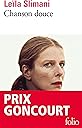
Chanson douce (French Edition)
Product ID: 103719595
Desertcart purchases this item on your behalf and handles shipping, customs, and support to UAE.
"Louise ? Quelle chance vous avez d’être tombés sur elle. Elle a été comme une seconde mère pour mes garçons. Ça a été un vrai crève-cœur quand nous avons dû nous en séparer. Pour tout vous dire, à l’époque, j’ai même songé à faire un troisième enfant pour pouvoir la garder." Lorsque Myriam décide malgré les réticences de son mari de reprendre son activité au sein d’un cabinet d’avocats, le couple se met à la recherche d’une nounou. Après un casting sévère, ils engagent Louise et sont conquis par son aisance avec Mila et Adam, et par le soin bientôt indispensable qu’elle apporte à leur foyer, laissant progressivement s’installer le piège de la dépendance mutuelle. Prix Goncourt 2016 Grand Prix des Lectrices de "ELLE" 2017 Grand Prix des Lycéennes de "ELLE" 2017 Prix des Lecteurs Gallimard 2016 Review: easy read and understand - Well written story once I started it I couldn’t put it down . Amazing turn of events and surprising outcome it makes you think hard about the way a working woman is gets trapped between her children and her career. It has happened to all of us. I dislike domestic helpers I rather have a dirty home than a nounou. Review: Classic French Novel - depicting a slow psychological decline. The added value is the intelligent analysis of class distinctions and of parental mores. Dependence and exploitation become mingled. The writing is fine but nothing extraordinary, and with the exception of Louise, I won't remember the characters all that well.
| Best Sellers Rank | #163,711 in Kindle Store ( See Top 100 in Kindle Store ) #19 in Literature & Fiction in French #30 in French Language Fiction #1,041 in Contemporary Literature & Fiction |
N**H
easy read and understand
Well written story once I started it I couldn’t put it down . Amazing turn of events and surprising outcome it makes you think hard about the way a working woman is gets trapped between her children and her career. It has happened to all of us. I dislike domestic helpers I rather have a dirty home than a nounou.
K**E
Classic French Novel
depicting a slow psychological decline. The added value is the intelligent analysis of class distinctions and of parental mores. Dependence and exploitation become mingled. The writing is fine but nothing extraordinary, and with the exception of Louise, I won't remember the characters all that well.
K**A
Don't let the beginning scare you off.
I started this before going on a trip and planned to read it on my Kindle. After reading a bit, I decided to read something else, something that wouldn't keep me awake at night. But - I read it after getting home. This is a great read. Not really a horror novel, although some horrible things happen. It's very well organized, well-written, insightful.
Z**A
second rate horror novel
I read this book because the author won a Goncourt prize. This book is well written. I don't know what the author was trying to say. Was the book social criticism. Mothers shouldn't work because there is no good child care. I found that the book dragged.
R**E
The Nanny
Birdlike, blonde Louise, hardly bigger than a girl herself, is a magician with children. At her interview with the busy Massé parents in their Paris apartment, she gently takes the squalling baby Adam from his father's arms, calming him instantly, and entices the toddler Mila out of hiding by pretending that she is a princess who has disappeared. Myriam, the children's mother, returns from her first day back at work as an advocate to find that Louise has totally tidied the cramped apartment, seemingly doubling it in size. When the nanny also shows her abilities as a cook, the father, Paul, who manages and records popular musicians, proudly invites friends and colleagues to enjoy the dinners prepared by their perfect nanny. Within weeks, Louise has become one of the family. It seems a miracle. But Leïla Slimani opens her book with the shocking words: "Le bébé est mort." The baby dead, the girl fatally wounded, the apartment bathroom a scene of carnage, the father away on business, the mother in shock. At first, it seems like a crime novel, working backwards to enable us to solve, or at least to understand, the murders. Yet Slimani is more subtle than that. Over the three or four years when Louise is working for the Massés—with occasional flashbacks to her previous employments, her life with her late husband, and troubles with her own daughter—the author paints a complex but instantly recognizable picture of contemporary social life. Unlike a mystery novel, there are few dark secrets waiting to be discovered, simply a developing subtext of class and privilege. Louise is no murderess in waiting, but a rather sad woman who neglects her own life to live vicariously through the perfect care of her charges. The Massés are struggling young professionals, living in the smallest apartment in their building. When they share their lives with Louise, even taking her on holiday to the Greek Islands, their affection is genuine. Leïla Slimani was born in Morocco in 1981, and came to France at the age of 17. CHANSON DOUCE, her second novel, won her the prestigious Prix Goncourt in 2016; it became an instant best-seller in France and awaits translation here. Race indeed plays a role in the subtext of class in the book, but it is a measure of the author's subtlety that she treats it only indirectly. It is Myriam, the rising lawyer, who is the Arabic-speaking immigrant; if there is any racism in the book, it is in her reluctance to hire a North African nanny who would seek a false sisterhood with her on grounds of language. But Louise is white. Her friend Wafa, indeed, is an undocumented immigrant, but she plays a minor role in the plot. Slimani's message is that life can deal a rotten hand to anyone; there is no need to look only to obvious factors to explain it. Myriam, defending an accused murderer in the course of her work, tells him: "We have to prove that you, you also are a victim." The case has nothing to do with the main plot, but everything to do with Slimani's theme. For when she is done, that is precisely how we see Louise: as a victim—not of others, but of life itself.
L**R
THE PERFECT NANNY by Leila Slimani Leila Slimani’s Prix Goncourt-winning novel ...
THE PERFECT NANNY by Leila Slimani Leila Slimani’s Prix Goncourt-winning novel delves into the tormented mind of Louise, the ultimate nanny, who doubles as housekeeper, gourmet chef, and organizer of childrens’ parties and outings, without extra pay. She’s also a working parent’s worse nightmare: a woman whose doll-like, Mary Poppins exterior conceals a damaged psyche rife with resentment, obsession, and rage. THE PERFECT NANNY chronicles the relationship between Paul and Myriam, two ambitious professionals in Paris’s tony 10th arrondissement, and Louise, the nanny too good to be true who does the unthinkable. “She’s our employee, not our friend,” Paul reminds his wife, but because Louise has become so invaluable, it’s a point they both keep conveniently overlooking. There’s no mystery here as far as the crime. On the first page, we’re told, “The baby is dead.” The question, of course, is not who murdered baby Adam and his older sister Mila, but what demons drove Louise to kill them. To that end, Slimani takes us into her stark and lonely world, the sparse apartment where she spends as little time as possible, the abusive husband who left her with crushing debts, the landlord who hounds her for money. Her days spent in her employers’ chic apartment mean freedom to Louise, and she makes the most of them. With the older child at school and the parents working, she luxuriates in a long, hot shower, then glides nude around the apartment, her skin pearlescent with Miryam’s expensive creams. Only occasionally does the unseemly surface, as when Paul comes home to find Louise has tarted up his daughter in full glamour make-up. Disgusted, he pulls away from Louise after that, but by then the unequal relationship has progressed too far, making Louise almost impossible to dislodge. While Louise obsesses over whether Myriam is pregnant again, the parents ponder ways to gracefully let her go. It’s that terrible disparity – the nanny’s fantasies of being part of a family when she is, in fact, hired help – that brings the novel back full circle to its devastating opening lines. Although the ending disappoints, leaving the reader to the observations of the police detective going over the scene, as a whole I found the novel engrossing on many levels – as a crime thriller and as a social commentary on class distinction, economic disparity, and motherhood.
M**N
Spellbinding
I could not put this book down. My French reading ability is limited but this one is not a difficult read. It is a feast paced psycho thriller that has unexpected depths That make it a great read. The structure of the novel is simple but there is complexity here that is very thought provocative. In short. It is a damn good read
F**I
Gripping
We’re aware of the tragic ending from the beginning and we follow the baby sitter as she evolves from unbelievable perfection to murderer. I ‘m not convinced by the actual process but the writing and the atmosphere are really perfect.
F**S
Libro con un contenuto molto profondo, scritto molto bene, consiglio l’acquisto!
Sono un professore di Francese e per le vacanze estive ho deciso di acquistare questo libro per i miei alunni. Dopo la prima lettura sono rimasto entusiasta dallo stile di scrittura adoperato dall’autrice Leïla Slimani e dalla storia coinvolgente che sicuramente farà riflettere il lettore. Molto soddisfatto del risultato, dopo le vacanze tutti i miei alunni sono tornati in classe anch’essi soddisfatti del contenuto. Consiglio vivamente l’acquisto!
F**�
Captivant
Un livre vraiment captivant ! Je recommande
G**B
Un livre addictif, captivant, frappant, hantant
Je découvre Leïla Slimani et me demande comment est-ce que j'ai pu passer à côté d'une auteure aussi remarquable. L'écriture fluide, les phrases courtes, l’histoire et la trame saisissante et captivante. Par endroit, au fil des mots, des phrases, des paragraphes et des pages on se reconnaît tantôt ans un personnage, tantôt dans un état d'esprit, une réaction, une attitude. On sympathise avec cette famille, on est remonté contre l'un ou l'autre, on se laisse fondre de tendresse pour Adam, on insupporte le cynisme enfantin de sa grande sœur. On fait des remontrances au couple. Et surtout on se prend d'une grande sympathie pour Louise, au point qu'on en arrive à se solidariser de sa situation et à questionner le manque de solidarité de ses employeurs à la hauteur de son dévouement. Plus les feuilles défilent, plus on redoute la faute à venir. On s'empresse d'y arriver autant qu'on craint les conséquences pour Louise. Mais Slimani sait nous amener doucement, sans brusquerie vers le dénouement douloureux, si bien qu'on finit par s'y faire. Ce livre mérite bien son Prix Goncourt et Slimani sa belle réputation d'auteure féconde et confirmée. Bravo à elle. Maintenant à nous deux vos autres romans. Je suis avide de vous lire Leïla Slimani.
J**E
Highly recommended book
An interesting book, when you start it you cannot put it down till you finish it.
S**T
Schön zu lesen
....eindringlich. Was mich dennoch störte: diese unbedingte Wille zum Antirassismus, der dazu führt, dass die Geschichte an Plausibilität verliert. Die Mutter der beiden Kinder, Myriam, das erfährt man nebenbei, ist arabischen Ursprungs. Sie ist gleichwohl eine Upperclass-Pariserin mit dem üblichen Habitus und arbeitet in einer Anwaltskanzlei. Die Nounou ist eine weiße Französin aus dem Prekariat der Banlieu um Bobigny. Hier werden also die Rollen getauscht. Da hat die Autorin einen Lieblingsgededanken, den sie unbedingt und wahrscheinlich in eigener Sache loswerden muss.
Trustpilot
1 week ago
2 months ago