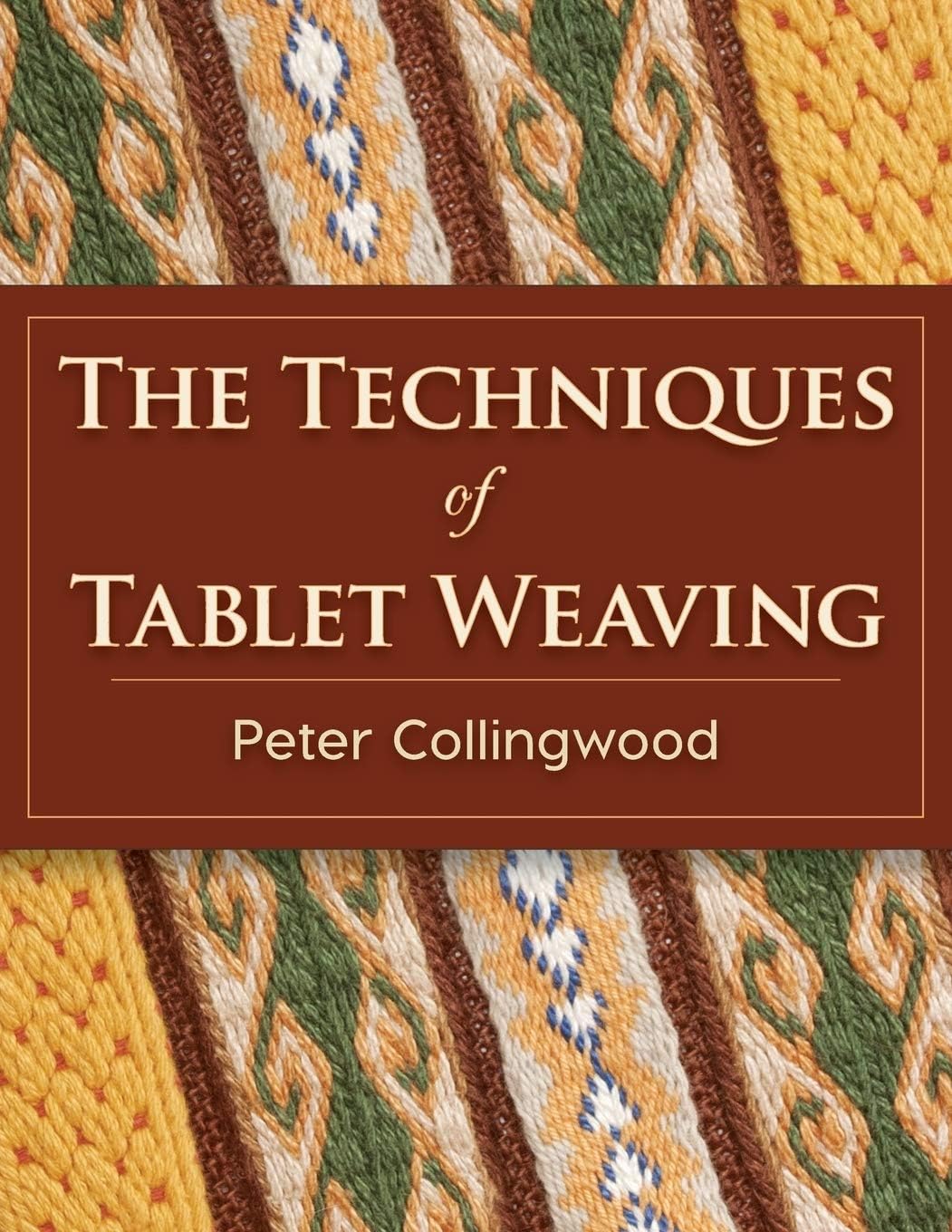
The Techniques of Tablet Weaving
Product ID: 19194062
📚Classic 1982 edition reprint
🧵Detailed weaving techniques & patterns
🏛️Rich historical context & research
Desertcart purchases this item on your behalf and handles shipping, customs, and support to UAE.
🧶 Weave history and innovation into every thread — don’t miss out on this fiber arts essential!
The Techniques of Tablet Weaving is a landmark 2015 hardcover reprint of Peter Collingwood’s classic 1982 guide, offering intermediate and advanced weavers a rich repository of detailed instructions, historical insights, and pattern examples. With crisp diagrams and extensive photos, this book is a must-have for serious tablet weaving enthusiasts seeking to deepen their craft and connect with a vibrant community of fiber artists.
| Best Sellers Rank | #122,567 in Books ( See Top 100 in Books ) #43 in Weaving (Books) #127 in Fiber Arts & Textiles |
| Customer Reviews | 4.6 out of 5 stars 205 Reviews |
P**Z
Classic book aimed at intermediate and advanced tablet weavers
tl;dr = Intermediate, and advanced tablet weavers are encouraged to get this book. Beginners should learn from a separate book specifically designed for learning to tablet weave (Candace Crockett's is still a good one). But get this (Collingwood's) book if you think you'll pursue this fibercraft further. This review is for the hardcover 2015 reprint version of Peter Collingwood's "The Techniques of Tablet Weaving". The book was purchased in new condition and fulfilled by Amazon. CONS - The pages are not "high quality" (more "average quality") but they are thinner possibly to reduce the size and weight of the book. The photos are faded and somewhat grainy but you can still manage to see the point they are trying to convey. PROS - The hardcover cover itself is good quality. The text and drawn diagrams are crisp and clear. And there are a LOT of photos and diagrams. The book begins with the known (at the time of original publication) history of tablet weaving. Because Collingwood was able to work with fibercrafters as well as museum personnel he had access to a wide range of information. In addition to showing historical techniques, he also shows his own experiments with tablet weaving. Text, photos, and diagrams enable readers to replicate (almost?) all of it. There is a great deal of technical information and it is presented well. Collingwood includes important aspects of tablet weaving such as how to make a continuous warp and how to thread multiple cards (tablets) at the same time. He covers the possible orientations of the cards and the different ways they can be manipulated during weaving. This book is appropriate for the tablet weaver who wants a better understanding of WHY tablet weaving works and how to expand on the basic "turn forward" "turn backward". It gives plenty of new techniques to try with tablet weaving. A beginner theoretically could learn to tablet weave from this book, but it would be challenging. However, once a beginner has learned the basics (from another book) this book is a wonderful resource for tips and tricks that are useful for tablet weavers of all levels.
L**T
Not for beginners but awesome reference. ...
This is an excellent reference time history of tablet weaving. As other reviewers have said, this is not a book looking for how to start out tablet or card weaving. However, if you are looking for techniques it is any excellent source. Mr. Collingwood did a great job with historical references and how to use and design using more then just a four hole tablet to weave with. There is only one thing I have to complain about with this book. That is the fact when you are reading and it makes a reference to a particular picture or plate number that they are on the same page as the reference. It gets a little madding to have to hunt the referenced picture down to see what the writing was talking about. Overall very good book!
D**N
Re brocaded card/tablet weaving, this is a good source.
I wanted to know more about brocaded tablet weaving, but didn't want to pay the much higher price for the "Ecclesiastical" cardweaving book, although there may be a less expensive way to get that (see those reviews). While Collingwood wrote for more experienced people (I'd seen his books on rug weaving and sprang and had had trouble understanding them, so I was nervous about ordering this one), I did not have nearly as much trouble with it. This may only mean that I have more experience with card/tablet weaving than with these other techniques. He definitely had what I wanted, including a simple way of making a "drawloom-type" mechanism for this purpose. However, I was looking for TECHNIQUES, not HISTORY, so be aware of that. For that particular use, this item is excellent. I can't say much about the other parts of the book as I wasn't (at this time, at least) very much interested in them except in a few spots (that may change). I will say, however, that it helps to know your weaving terminology in advance as he doesn't appear to define his terms. The book was worth the price in my mind.
B**H
Buy two - one to keep and one to loan out!
Comprehensive and informative. It was recommended by a friend and she was stunned to find it was back in print at a reasonable price! The hardcover is high-quality and will last a long time. Because it is a reprint of a lower-budget 1980's book, be prepared for lots of black and white pictures and hand drawings, but they are still very informative and convey the desired information well.
R**H
I know a lot of beginning weavers who hear that ...
I know a lot of beginning weavers who hear that this is "the" tablet weaving book, buy it, and end up frustrated - because it isn't a hands-on "how to" instruction book for crafters. It was written as a comprehensive catalogue of weaving techniques, aimed at researchers, textile historians, and museum workers - and in that respect, it really *is* The Book. That being said, Collingwood does provide plenty of patterns and other information on replicating different designs and weaving styles, but it helps to know the basics first. With that in mind, it's a top-notch reference, and the range of material covered is impressive.
P**E
Happy customer.
This book is very good. It covers the history of weaving and gives you considerable amounts of diagrams so you can get a better idea of what is being explained. One thing I would have liked is for the diagrams to be more professional. All in all the book covers such a wide range of forms of weaving that there is something of interest for everyone.
S**S
Fantastic
Once you have started to Card Weave and have a little knowledge but want more and want true understanding of what is actually happening, get this book. It will answer all your questions. It is not, however, a beginners guide to get you up and running. It isn't a step by step guide although he does explain particular procedures in very great detail. It's just that there are no projects in it for you to try from start to finish like other "How To" books. If you are a beginner get Candace Crockett's book and try a few projects and then buy this one. It will answer all your questions and provide you with more methods than the Crockett book.
M**R
Great second book to own
This is dense with detail-- and overwhelming for the first time table weaver. Get Candice Crockett's _Card Weaving_ book first. When you decide you're ready to get geeky about tablet weaving then this is the book for you.
C**R
A "must have" forserious band weavers
This is an awesome book. It is a reprint from 1985 and all photos are black and white but that doesn't matter. The book itself is rather detailed and easy to understand. It starts with a bit of history with some interesting photos. Then it is explained how card weaving works, it explains the twist, how you thread the cards, how you read the drafts, how to dress a card weaving loom and get started and how you can start and finish the bands. This book is full of knowledge. There are heaps of patterns, photos and illustrations throughout the book. Instructions are easy to follow. Heaps of techniques are explained. They are for beginners and for advanced card weavers as well. I really love this book.
P**.
Cards
Great book . Easy to follow instructions
M**N
Peter Collingwood geht es auf dem Grund
Peter Collingwood erklärt sehr detailliert verschiedene Techniken beim Brettchenweben. Auch Geschichte, Geräte und eine Einführung in das bespannen der Brettchen werden besprochen. Ein gutes Nachschlagewerk, man entdeckt immer wieder etwas neues.
B**A
bible pour le tissage plaquettes, en anglais...
bases de tissage tablettes, seul bémol : en anglais !
L**E
Anything you want to know about tablet weaving - it's in here.
Great book for understanding the history of Tablet weaving - and the technology and the nature of the fabric produced. Including the limitations, such as the twist introduced that needs releasing. I was having trouble getting my head round what was happening to be able to be much good at this weaving technique. If you need to understand processes to be able to do them this is the book for you. There are patterns in here, with clear explanations of all the ways you can manipulicate cards to effect patterning. This is amust have for anyone serious about getting into using cards to make lovely braids.
Trustpilot
3 weeks ago
2 weeks ago