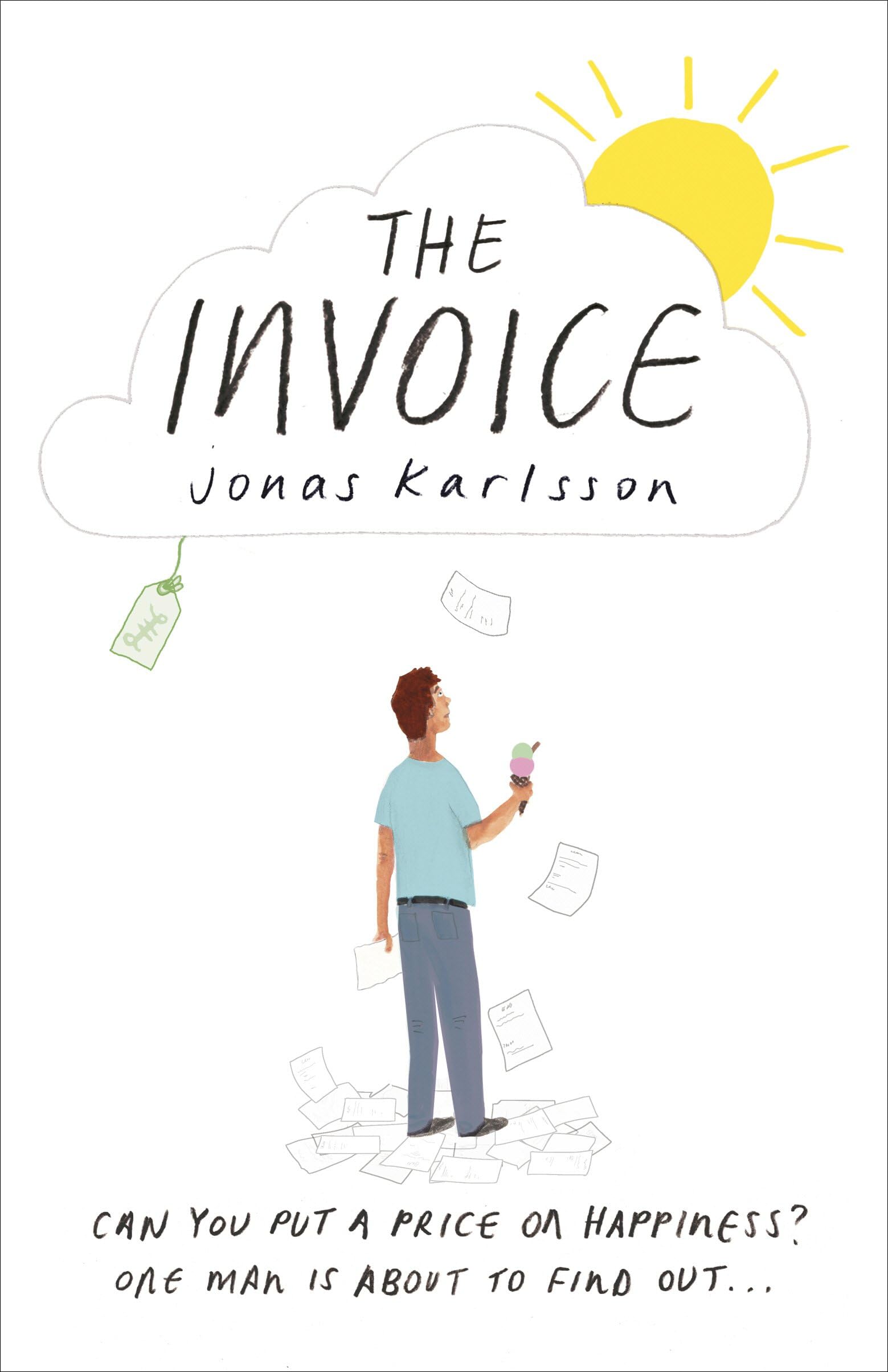

The Invoice
Product ID: 60950951
Buy anything from 5,000+ international stores. One checkout price. No surprise fees. Join 2M+ shoppers on Desertcart.
Desertcart purchases this item on your behalf and handles shipping, customs, and support to UAE.
Buy The Invoice by Karlsson, Jonas (ISBN: 9781781090411) from desertcart's Book Store. Everyday low prices and free delivery on eligible orders. Review: a great read, with echoes of our mad-mad world and ... - This was my second Jonas Karlsson book, translated by Neil Smith, and it did not let me down. Absurd, gripping, a great read,with echoes of our mad-mad world and a sense that its nightmare scenario could be potentially closer to reality and future than it purports to be. It leaves the reader with a more satisfying sense of 'resolution' than 'The Room', which will be good for some, not so good for others. Highly recommended. Review: If You're Happy and You Know It , Pay Your Bill - Karlsson is low-key and deadpan in a chilly but ultimately affirmative way. I enjoyed his first novel, "The Room", which was edgier and much more acerbic than this offering. But, this book follows the same slow-buildup, slow burn humor and pointedness that I guess is becoming Karlsson's calling card. The book seems simple enough on its face, but it keeps circling around its premise and adding more layers. Our hero receives a huge bill out of the blue to cover his personal share of the overall national happiness. Thinking it's a joke he calls some government office and is told in no uncertain terms that everyone has been surveyed, reviewed and assigned a personal "external happiness" level, upon which a tax has been levied. O.K., that's a funny and very imaginative way to start a Kafka-lite tale. But then Karlsson starts to spin the idea out. (MILD PREMISE AND PLOT SPOILERS.) Why is our hero's invoice astronomically high when he does not appear, outwardly, to be all that successful or "happy"? Why is his bill much higher than those of his friends who seem so happy and successful? How could he have missed the news that this was going to happen? And then the plot thickens. Is our hero developing a crush on Maud, the very interesting woman who takes all of his calls? Why is it that every time he tries to demonstrate his unhappiness, (in an effort to lower his bill), his unhappiness is found to have a silver lining and his charge goes up? And so it goes, getting more and more surreal, and yet teasing out interesting thoughts about what constitutes happiness in this modern age. The book isn't preachy at all; it's more like an amiable and engaging collection of parables and fables featuring this perfectly normal everyman who likes ice cream. "Charm" is an overused word, but it fits here, even if there is sometimes a bracing hint of an edge to some of our hero's observations. Karlsson is Swedish, and in some ways it shows in his occasionally wintry humor. But, if you like the idea of a minimalist, crisp, IKEA design of a book that is wise and funny and full of an especially thoroughly examined, catalogued, and money-valued life, this could end up being a real treat. (Please note that I received a free ecopy of this book without a review requirement, or any influence regarding review content should I choose to post a review. Apart from that I have no connection at all to either the author or the publisher of this book.)
| Best Sellers Rank | 1,322,527 in Books ( See Top 100 in Books ) 9,054 in Horror Graphic Novels (Books) 10,886 in Crime & Mystery Graphic Novels |
| Customer reviews | 4.0 4.0 out of 5 stars (187) |
| Dimensions | 13.8 x 1.9 x 20.4 cm |
| ISBN-10 | 1781090416 |
| ISBN-13 | 978-1781090411 |
| Item weight | 254 g |
| Language | English |
| Print length | 160 pages |
| Publication date | 7 Jan. 2016 |
| Publisher | Hogarth |
V**A
a great read, with echoes of our mad-mad world and ...
This was my second Jonas Karlsson book, translated by Neil Smith, and it did not let me down. Absurd, gripping, a great read,with echoes of our mad-mad world and a sense that its nightmare scenario could be potentially closer to reality and future than it purports to be. It leaves the reader with a more satisfying sense of 'resolution' than 'The Room', which will be good for some, not so good for others. Highly recommended.
A**R
If You're Happy and You Know It , Pay Your Bill
Karlsson is low-key and deadpan in a chilly but ultimately affirmative way. I enjoyed his first novel, "The Room", which was edgier and much more acerbic than this offering. But, this book follows the same slow-buildup, slow burn humor and pointedness that I guess is becoming Karlsson's calling card. The book seems simple enough on its face, but it keeps circling around its premise and adding more layers. Our hero receives a huge bill out of the blue to cover his personal share of the overall national happiness. Thinking it's a joke he calls some government office and is told in no uncertain terms that everyone has been surveyed, reviewed and assigned a personal "external happiness" level, upon which a tax has been levied. O.K., that's a funny and very imaginative way to start a Kafka-lite tale. But then Karlsson starts to spin the idea out. (MILD PREMISE AND PLOT SPOILERS.) Why is our hero's invoice astronomically high when he does not appear, outwardly, to be all that successful or "happy"? Why is his bill much higher than those of his friends who seem so happy and successful? How could he have missed the news that this was going to happen? And then the plot thickens. Is our hero developing a crush on Maud, the very interesting woman who takes all of his calls? Why is it that every time he tries to demonstrate his unhappiness, (in an effort to lower his bill), his unhappiness is found to have a silver lining and his charge goes up? And so it goes, getting more and more surreal, and yet teasing out interesting thoughts about what constitutes happiness in this modern age. The book isn't preachy at all; it's more like an amiable and engaging collection of parables and fables featuring this perfectly normal everyman who likes ice cream. "Charm" is an overused word, but it fits here, even if there is sometimes a bracing hint of an edge to some of our hero's observations. Karlsson is Swedish, and in some ways it shows in his occasionally wintry humor. But, if you like the idea of a minimalist, crisp, IKEA design of a book that is wise and funny and full of an especially thoroughly examined, catalogued, and money-valued life, this could end up being a real treat. (Please note that I received a free ecopy of this book without a review requirement, or any influence regarding review content should I choose to post a review. Apart from that I have no connection at all to either the author or the publisher of this book.)
S**E
Mundane and surreal
A man receives an invoice of millions for the life he’s lived thus far, simply being alive! The man tries to understand his predicament by calling the company charging him and, amidst this Kafkaesque scenario, unexpectedly finds romance at the other end of the line - but what will happen to him if he can’t pay the bill? Swedish author Jonas Karlsson’s novella The Invoice is an intriguing and original tale of existentialism that won’t say anything that’ll blow your hair back or have you on the edge of the seat, but is also quite pleasant and gently entertaining. The premise is interesting up until he starts going to the company to speak to its investigators, then it becomes less compelling as you realise it’s just a faceless company like any other - the mystery is gone. The conversations between our nameless narrator and Maud, the woman handling his case over the phone, were convincingly realistic and I liked that Karlsson slowly developed their relationship to the point where you believed they might have feelings for each other - it was never rushed or melodramatic. The main character’s life is unremarkable - he works part-time in a video store, he lives alone in a modest apartment, he has a friend, he enjoys the simple pleasures of life - but he likes it. It’s only when he’s forced to evaluate his life, like this company has done, that he becomes unhappy - comparison is the thief of joy, as Teddy Roosevelt said, and that’s exactly what happens. It leads to the best scene in the book when the narrator breaks down to Maud but also gets to the heart of what I think the story is really about: perception is everything when it comes to personal happiness. The narrator is happy precisely because he’s not worried about how others view him - he lives the life he wants to live and finds pleasure in the smallest of things, like his favourite ice cream, or watching a good movie. The other characters in the story are unhappy because they’re focused on things like money or career advancement to the detriment of all else, and our narrator is only brought down to their level when he’s forced to see things from those limited perspectives as well. The narrator also has an Escher print on his wall, an artist who famously played with perspective. It’s also about other things like being happy with what you have and recognising that, if you’re a Westerner living comfortably, most people’s lives are going to be worse than yours, all of which feed into the idea of perception. The story doesn’t really develop after a certain point and becomes repetitive with the narrator either going into the company’s offices for another meeting or another long convo with Maud, and the ending is underwhelming but satisfying. So it’s not the most consistently engaging narrative, though it has enough going on to keep from becoming tedious. And it’s well-written and easy to read with a sweet, guileless message in keeping with the narrator’s character. I didn’t love The Invoice but I enjoyed it enough to say it was worth reading and I’ll keep an eye out for more from this author. If you like Haruki Murakami’s novels, which also blends the mundane everyday with the surreal, you might enjoy Jonas Karlsson’s The Invoice too.
N**H
Life affirming.
Great read. Poignant message and written with Swedish simplicity.
J**A
Great food for thought!
The Invoice was a short but pleasant read. A light hearted story about a man who receives a massive invoice charging him for all his "experienced happiness". The amount he is charged is so huge it would be impossible to pay even over a lifetime! The book leaves our character (we never learn his name) and you, the reader, to really ponder some big questions like how happy you really are, what makes you happy, what is the perceived value of your happiness, what deductions should be made for any period when you have been unhappy and so many other ponderances...... I'd like to rate the book higher as it was a well written and kept me interested, but it was very short and so many details were not elaborated on.
J**I
Intense. A fascinating concept. He turns lots of ideas on their head especially about individual liberty, happiness and the role of government. Beyond that, it also causes you to question what success really is, how it’s measured and how to keep score.
C**E
I read this book for a book club. I say interesting because it really got you thinking about materialism and what is really important. I read it in a few hours I really enjoyed it. Only 4 stars I would have liked it to be longer.
M**.
How do you measure happiness? By the number of friends you have? Or the prestige of your job? Maybe you’re happy if others think highly of you or praise you. Maybe happiness is related to the neighborhood you can afford or the make and model of your car. Smart people are happy, of course. Or are they? the invoice by jonas karlssonThe new novel The Invoice by Jonas Karlsson explores just what makes a person happy. When we first meet him, the narrator’s life seems slightly shabby. Something of a film buff, he works part-time at a video store. His apartment is small and he is content with a few computer games, an occasional beer, and raspberry ice cream on a hot summer’s day. We know of one friend, Roger, and his parents are dead. He’s been single since the great love of his life Sunita returned to India and an arranged marriage. Definitely an underachiever by my standards--maybe even by most accounts. But then he receives the invoice, charging him for everything. “Being alive costs,” he’s told. His bill: 5,700, 000 kronor … or approximately $662,000. He’s ignored previous notices in his mail, assuming they were junk mail. He doesn’t watch or read the news, so he’s missed out on months of public service announcements. Now it’s time to pay up. External Happiness score (or E.H.) is “calculated according to a formula that takes account of age, place of residence, particular experiences, success, proximity to the sea … quality of home and relationships.” It’s all very objective. When he calls the helpline to correct what he assumes is a mistake, he connects with Maud, and she arranges for an inventory of his flat since he hasn’t the money to pay. Eventually, he gets an appointment with someone who can review his account--he’s hoping to prove he’s had some setbacks and get a discount of sorts. So he lists his parent’s deaths. His breakup with Sunita. His adjusted invoice? 10,480,000 kronor. And this is where the novel got interesting for me. Here’s how the auditors see his account: … high E.H. points since the age of twelve, no empathy inhibitors. Parents both deceased. No family of his own, but regular experience quotient from comparable relationships. No setbacks noted since last December. Zero poverty rating. Top score on the emotional quotient. A number of good friendships over the years … Also an uncle--full marks as a role model. THe child’s response regarding the subject is fully emotional. Reliable … strong emotional attachments without any pressure to achieve … whiteness premium, male premium … Nothing but character forming setbacks. All according to the progression framework. There’s no deviation from the development model. He’s almost a textbook example of the Live for today template … almost absurd levels of pleasure … And full access to his feelings. Eventually, the poor guy’s E.H. invoice tops out at 149,500,000 kronor. It was that sentence “Nothing but character forming setbacks” that struck me. When relationships are distant or damaged, when finances run amok, or work no longer satisfies, we might choose to embrace our good fortune instead of complain. Sadly, I think something was lost in translation because for a book centered around such an engaging (and original!) idea, the writing felt flat. Even the main character (who, by the way, is never named in Any Man fashion) seemed colorless, despite his predicament. It’s a farce of a novel with an extraordinary premise, though, and just might be worth your time. Especially if you find yourself questioning happiness.
J**R
Any time you can combine the humorous and the profound, I am on board. That is exactly what Karlsson does here. Kafka light. I loved it.
J**W
Well written and entertaining.
Trustpilot
3 weeks ago
1 month ago